
Scanning Electron Microscopy (SEM) is a powerful imaging technique that enables researchers and engineers to visualize surface structures at nanometer to micrometer scales. By scanning a focused electron beam across a specimen, SEM delivers high-resolution images with exceptional depth of field, making it a critical tool for materials analysis, quality control, and failure investigation. Its ability to reveal fine morphological details, composition contrast, and microstructural features allows users to better understand how materials behave, identify defects early, and accelerate research and development.
For many laboratories, R&D teams, and small companies, owning a SEM system may not be viable in the short term. Renting a SEM is a practical and cost-effective way to access high-resolution imaging without the financial and logistical commitments of owning a system. It also allows users to scale imaging capacity with project demand, bridge gaps when existing equipment is out of service, or evaluate an SEM before purchasing. This model brings powerful materials characterization in-house, improves turnaround time, and supports more agile decision-making across research, QA, and product development.

Electron Microscopy Innovative Technologies (EMIT)
Neal Magdefrau, Ph.D. was a research scientist and engineer with United Technologies Research Center (UTRC) and manager of the electron microscopy lab. During this time, he found that in many instances they were limited by access to a SEM.
“We often got into situations where we had enough people, but we were equipment limited,” Magdefrau said. “When we got very, very busy, it would have been great to have another SEM available, even if it was just for a couple months of the year.”
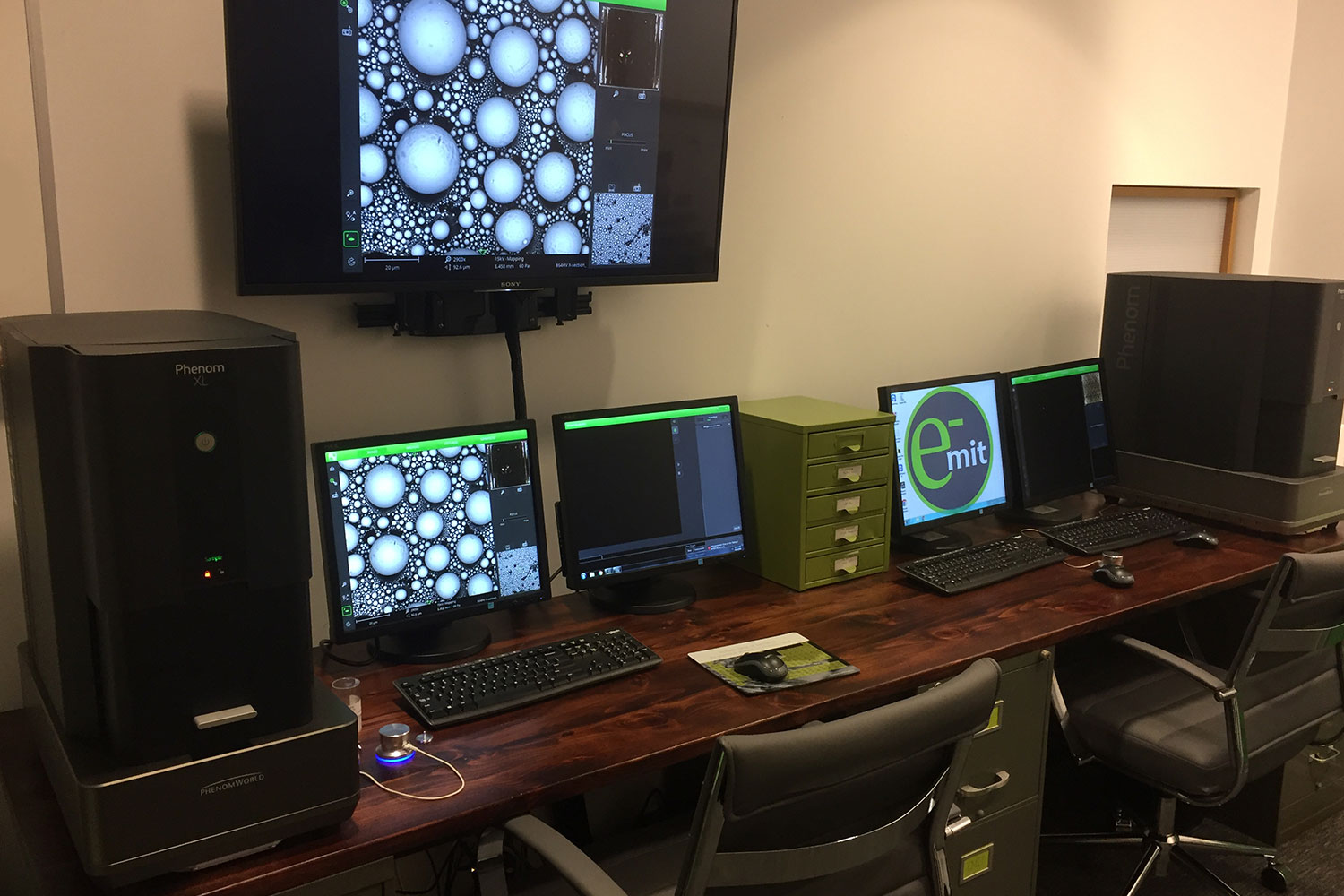
Magdefrau started Electron Microscopy Innovative Technologies (EMIT) in August 2014 in direct response to this need. EMIT is the first business in the United States to offer SEM rental services, increasing the accessibility of SEM technology across the country. They offer Phenom desktop SEMs for rent on a monthly or weekly basis and provide training and troubleshooting support for all Phenom SEM rentals.
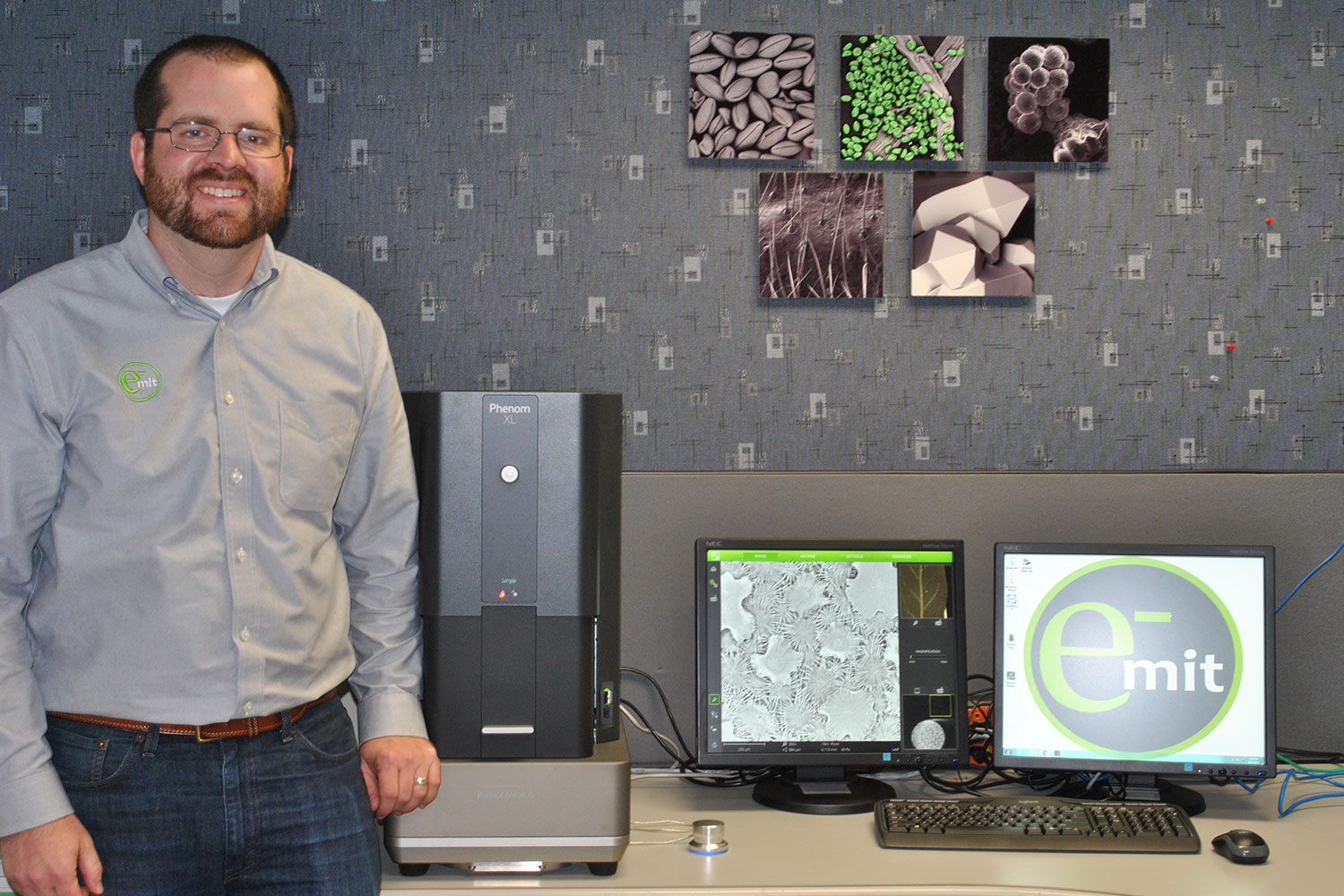
Why Phenom Desktop SEM?
Conventional floor-model SEMs are complex instruments that require specialized expertise to operate the system, dedicated space, auxiliary systems, and environmental conditioning.Phenom desktop SEMs offer many of the capabilities of full-size electron microscopes while significantly reducing complexity, footprint, and cost.
“They’re extremely easy to use,” Magdefrau said. “From a customer standpoint, that’s really a big thing, especially since I have a couple of customers that have 30, 40 users using a single Phenom system.”
The Phenom’s compact design allows laboratories to perform high-resolution imaging directly at the point of need, eliminating reliance on centralized microscopy facilities and long queue times. Simplified workflows and automated functions enable even non-experts to obtain reliable data quickly.
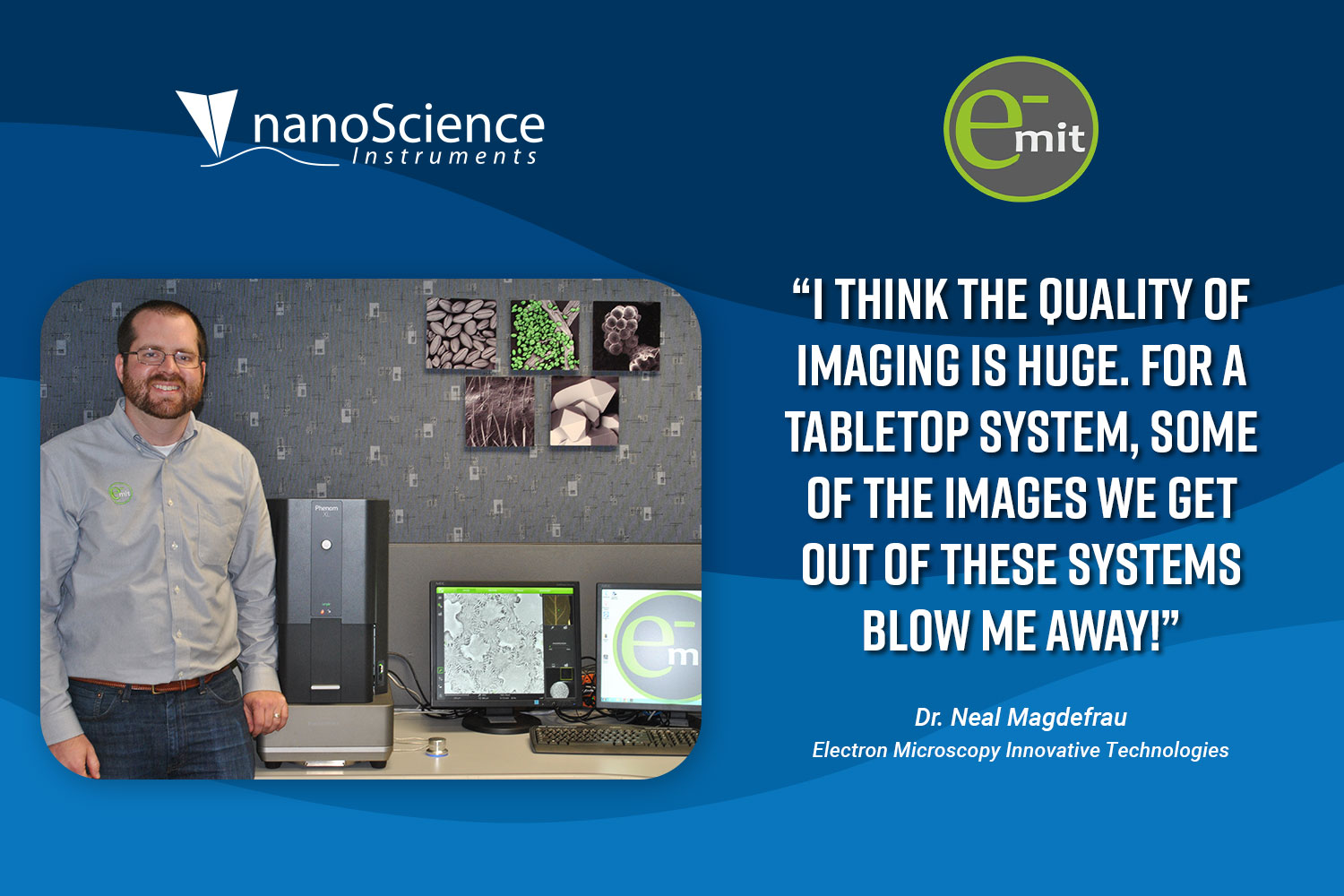
“I think the quality of imaging is huge. For a tabletop system, some of the images we get out of these systems blow me away. The cerium hexaboride source is just a nice high brightness source.”
In addition to the quality and simplicity of imaging with Phenom SEMs, their durability and robustness have been especially valuable for EMIT’s rental operations.
“Over the last 11 years we’ve had very, very few issues and nothing major on any of our systems,” Magdefrau said. “We’ve been lucky that we’ve gotten some good customers, but also, I think it speaks to the quality of the Phenom systems.”
When asked about Phenom applications that stood out to him, Magdefrau recalled a nature photography group that used EMIT’s systems to image the microstructures of polar bear fur and penguin feathers. Other EMIT customers have used Phenoms to analyze medical devices, blood tests, and a wide range of metals and ceramics.
“No one application really stands out specifically, but I think that’s a testament to the Phenom, it’s so versatile.”
Renting vs Owning
EMIT’s rentable SEMs are appealing options for research groups operating with short-term funding plans. Especially for projects lasting a year or less, purchasing instruments may not be feasible.
“The other main customers we have are larger corporations that just need more throughput, which is the bucket that I would have been in while at my previous role,” Magdefrau said. “We get certain times of the year or certain programs where they need to be running SEM almost 24/7. Maybe they have their own internal system or systems already, but they just don’t have enough throughput.”
Magdefrau has also rented SEMs to customers that have already narrowed in on their choice of a Phenom SEM but prefer to have hands-on experience before committing to an instrument purchase.
“Leasing the systems can be beneficial to the customer if they’re in these uncertain times,” Magdefrau said. “It gives them a little bit of a holdover to be able to make a decision at a later point.”
Working with Nanoscience Instruments
During his time at UTRC’s electron microscopy lab, Neal recognized a need for short-term access to a scanning electron microscope (SEM). The idea of an SEM rental service was novel and untested. To bring it to life, he required an SEM that was user-friendly, easy to learn, and simple to transport and set up.
“Honestly, many companies with desktop SEMs looked at me like I had two heads when I shared my idea of starting an SEM rental business,” Magdefrau said.
At a conference, he met Sebastian, Co-CEO of Nanoscience Instruments, who immediately found the plan intriguing. Neal launched his business by acquiring a demo Phenom desktop SEM from Nanoscience Instruments.
“All these years later, we’ve probably purchased 10 or 12 Phenom systems from Nanoscience,” Magdefrau said. “It’s been great working with them over the years.”