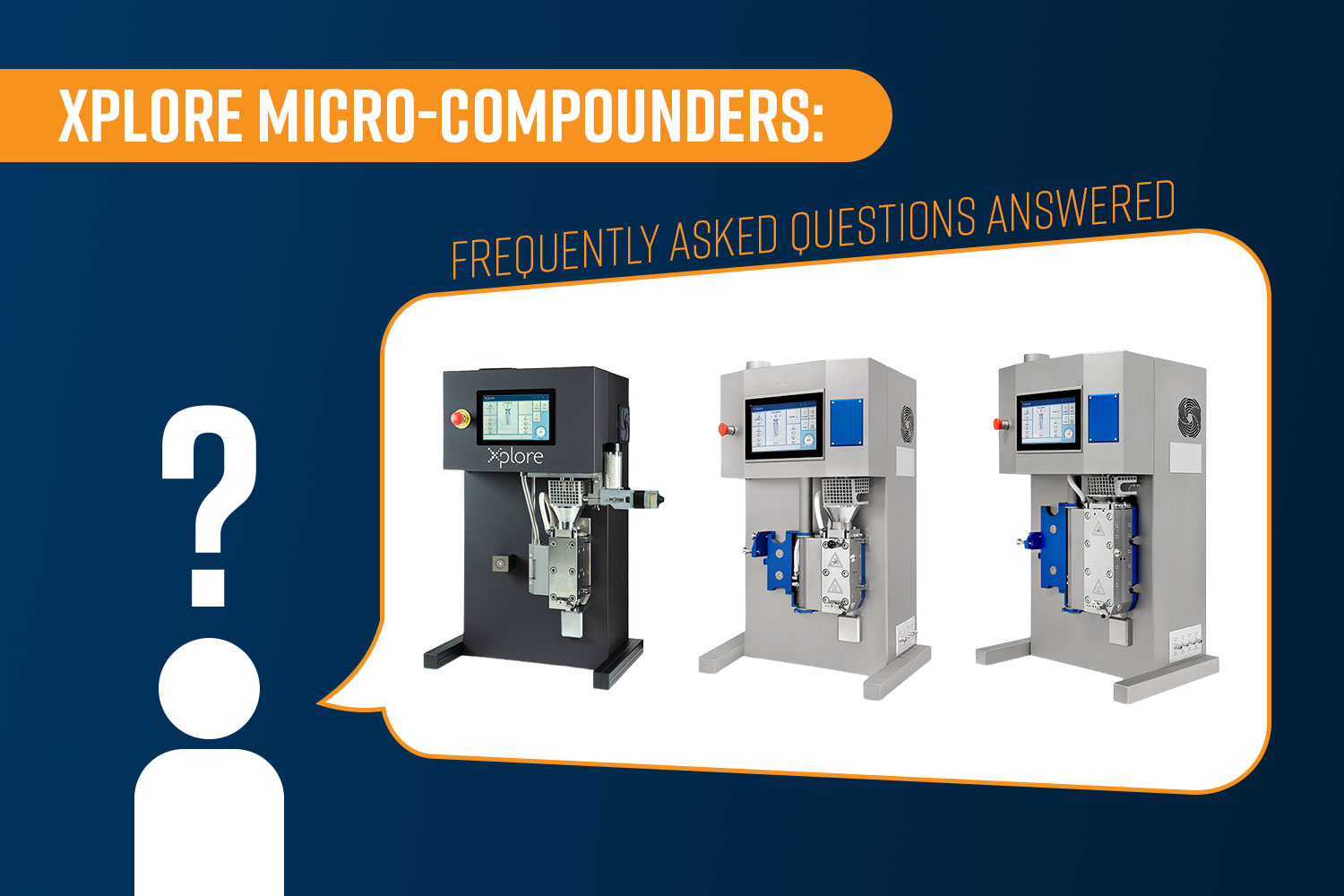
Xplore Micro-Compounder Overview
What is a micro-compounder?
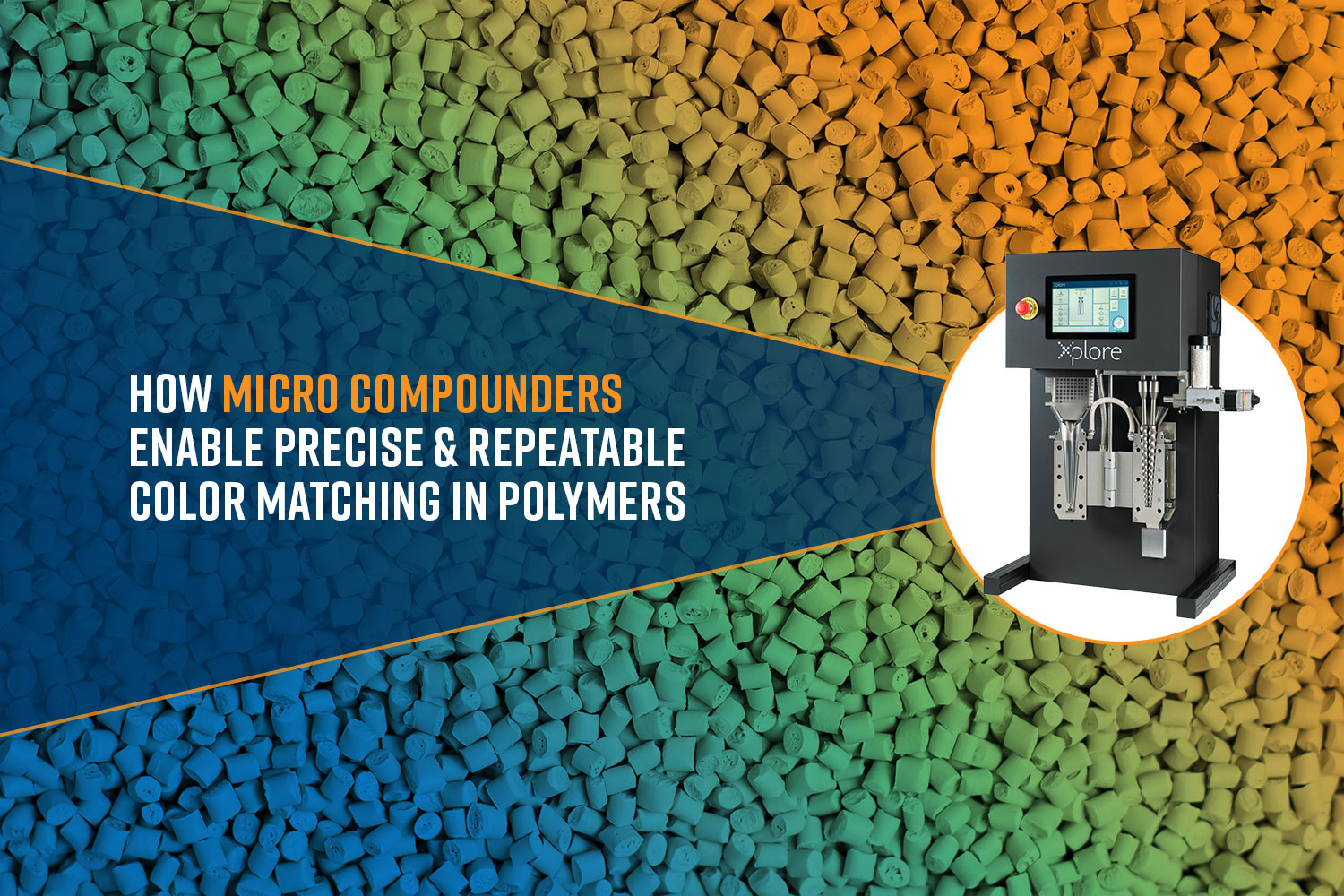
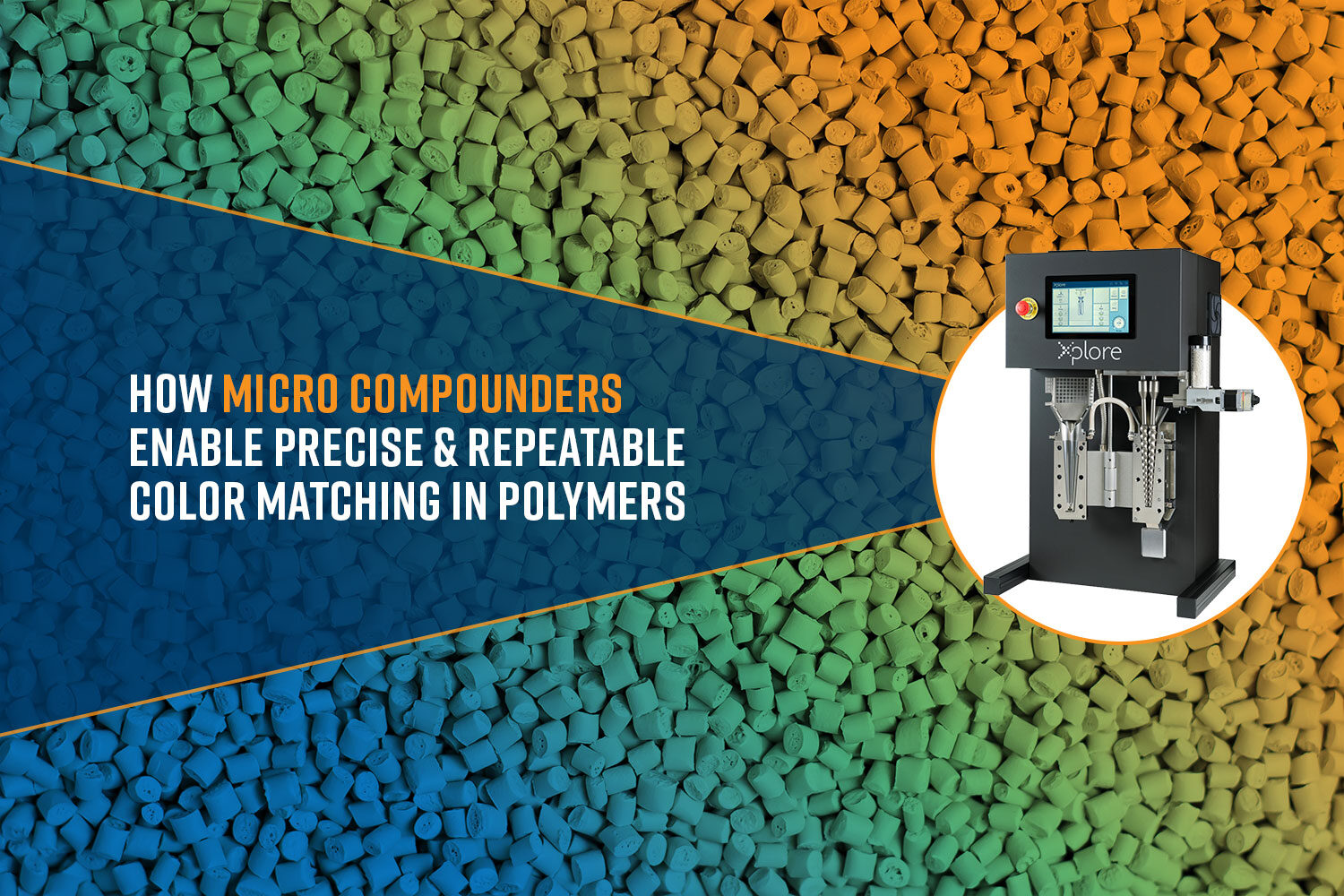
A micro-compounder is a laboratory-scale extrusion system that melts, mixes, and processes small quantities of polymeric materials. It enables researchers to screen formulations, evaluate additives, develop composites or blends, and optimize processing conditions much quicker while minimizing material consumption.
What are the advantages of Xplore micro-compounders?
Xplore micro-compounders support batch and continuous processing, real-time temperature, RPM, and torque monitoring, and integration with downstream equipment. They help researchers develop polymer formulations, investigate mixing behavior, and prepare materials quickly for further testing using limited sample quantities.
What materials can Xplore micro-compounders process?
Depending on the model and configuration, applications include polyolefins, polyesters, polyamides, thermoplastic elastomers, biopolymers, high-performance polymers, filled compounds, and advanced composites. Unique barrel hardness of the Xplore systems also offer the ability to process abrasive and corrosive fillers.
What is the difference between batch and continuous compounding?
Batch compounding processes a defined quantity of material per run, commonly between 3 – 50 g of material, making it suitable for formulation screening. Continuous compounding automatically feeds material throughout operation, supporting sustained processing and integration with downstream equipment.
Can Xplore micro-compounders connect to downstream equipment?
Yes. Compatible configurations support downstream processes such as micro injection molding, and automated cast film extrusion, filament extrusion, micro tube extrusion, fiber spinning, and composite impregnation.
MC Xperience Line FAQs
What is the MC Xperience Line designed for?
The MC Xperience Line is designed for cost-effective polymer development, formulation screening, and general-purpose laboratory processing, particularly when sample quantities are limited.
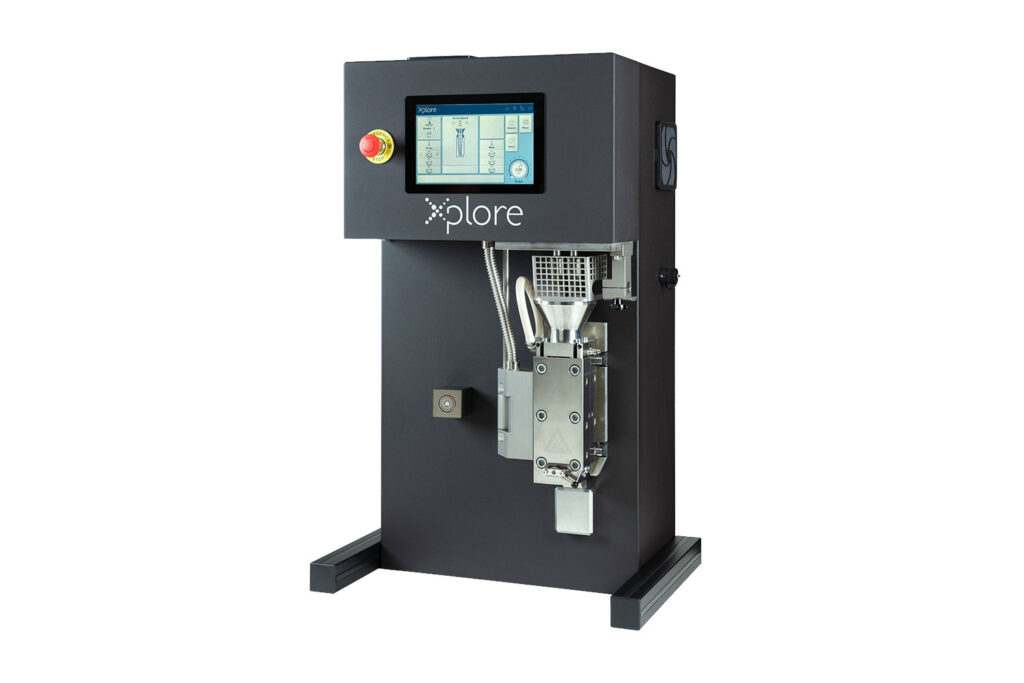
What is unique about the MC Xperience Line?
The MC Xperience is designed to offer all key capabilities for a micro-compounder with a pathway to upgrade the system as new needs come up. Upgrades include addition of counter rotation, water cooling for faster iterations, inert gas lines, and automated feeding.
What processing volumes are available?
The MC Xperience Line offers 5 ml and 15 ml configurations, with customization options available for specific volume requirements.
What are its maximum temperature and torque specifications?
Depending on the model, maximum torque ranges from 10 to 20 Nm. The standard maximum operating temperature is 350 °C, with an optional upgrade to 425 °C.
Can the MC Xperience Line operate continuously?
Yes. A single automatic pellet feeder can support continuous material feeding during extrusion.
What applications are supported?
Applications include polymer blending, reactive extrusion, chain extension studies, filled polymers, and the development of films, filaments, and fibers when suitable downstream equipment is used.
Who should choose the MC Xperience Line?
It is well suited to universities, research institutes, and industrial R&D laboratories conducting general-purpose polymer research and small-scale formulation screening.
MC 15 HT FAQs
When should I choose the MC 15 HT?
The MC 15 HT is designed for demanding applications requiring elevated processing temperatures, high torque, precise screw-speed control, or processing of high-viscosity and highly filled materials. This is often the best choice for shared or core labs with wide ranges of applications.

What are its maximum temperature and torque specifications?
The MC 15 HT reaches temperatures up to 475 °C and delivers maximum melt torque of 40 Nm in a 15 ml processing volume.
What is Vari-Batch® technology?
The optional Vari-Batch® feature allows users to select processing volumes of 3 ml, 7 ml, or 15 ml, helping match material consumption to different experimental requirements.
How precisely can screw speed be controlled?
At low speeds, adjustments can be made in increments of 0.1 rpm. This supports fine control of processing conditions during formulation development and continuous extrusion.
Can I customize the screw and feeding configurations?
Yes. The MC 15 HT offers co-rotating or counter-rotating screw configurations and can accommodate two independently controlled automatic feeders for powders, pellets, or combinations of both.
Which materials can the MC 15 HT process?
Typical applications include high-temperature polymers such as PEEK, PPS, and PEI, as well as carbon-filled and mineral-filled compounds, high-viscosity elastomers, advanced composite formulations, and thermosets.
How does the MC 15 HT reduce downtime?
Its integrated air- and water-cooling systems supports faster heating and cooling cycles, helping reduce temperature transition times between experiments.
MC 40 FAQs
What is the MC 40 designed for?
The MC 40 is intended for applications requiring larger processing volumes, continuous compounding, or more material for downstream testing and characterization.

What are its processing volume, maximum torque, and temperature?
The MC 40 has a 40 ml processing volume, maximum torque of 40 Nm, and maximum operating temperature of 425 °C.
How can the MC 40 improve mixing?
An optional screw design with double-cam kneading blocks can increase residence time and shear, supporting improved melting, dispersive mixing, and material homogeneity.
Can the MC 40 process powders and pellets continuously?
Yes. Two automatic feeders can be configured to dose powders, pellets, or both during continuous processing.
Which downstream processes can be integrated?
Compatible workflows include cast film extrusion, 3D printing filament extrusion, fiber spinning, and composite impregnation.
Who should choose the MC 40?
The MC 40 is suited to laboratories conducting continuous compounding studies, preparing larger sample quantities, or integrating compounding with downstream material shaping.
Choosing the Right Xplore Micro-Compounder
Which model is best for rapid formulation screening?
The MC Xperience Line is a strong choice for general-purpose polymer development and cost-effective screening with limited material quantities.
Which model is best for high-temperature or highly filled materials?
The MC 15 HT is particularly suitable when processing requires temperatures up to 475 °C, maximum torque of 40 Nm, or precise process control.
Which model is best for continuous compounding and larger sample quantities?
The MC 40 is a good option when a larger processing volume, continuous operation, and material production for downstream testing are priorities. The MC 40 is an excellent choice when both batch compounding and traditional lab scale compounding are required.
What factors should I consider when selecting a micro-compounder?
Consider the following factors:
- Sample availability: How much material can you allocate per experiment?
- Required Down Stream Processes: How much material is required for all later testing?
- Temperature and torque: What are the material’s processing requirements?
- Mixing performance: What filler dispersion or blending characteristics are needed?
- Feeding requirements: Will you process pellets, powders, or multiple components?
- Operating mode: Do you need batch processing, continuous extrusion, or both?
- Downstream processing: Will you produce pellets, films, filaments, fibers, or molded samples?
Can micro-compounders support polymer scale-up studies?
Yes. Micro-compounders help researchers evaluate formulations and processing conditions before moving to larger equipment. With the rheological software shear stress shear rate and melt viscosity can be measured. However, differences in screw geometry, throughput, residence time, and heat transfer mean that laboratory results should be validated during scale-up.
Why are temperature and torque monitoring important?
Temperature influences melting, viscosity, and thermal stability, while torque indicates the mechanical load required to process the material. Monitoring both parameters helps researchers compare formulations and evaluate processing behavior under controlled conditions.
Find the Right Xplore Micro-Compounder
The Xplore range offers solutions for different laboratory-scale polymer processing needs:
- MC Xperience Line: General-purpose polymer research and formulation screening.
- MC 15 HT: High-temperature, high-torque processing and demanding formulations.
- MC 40: Larger processing volumes and continuous compounding workflows.
Contact our team to discuss your materials, processing requirements, and downstream applications and identify the most suitable Xplore micro-compounder for your research.