

Polymer Micro-compounding
Micro Fiber Line
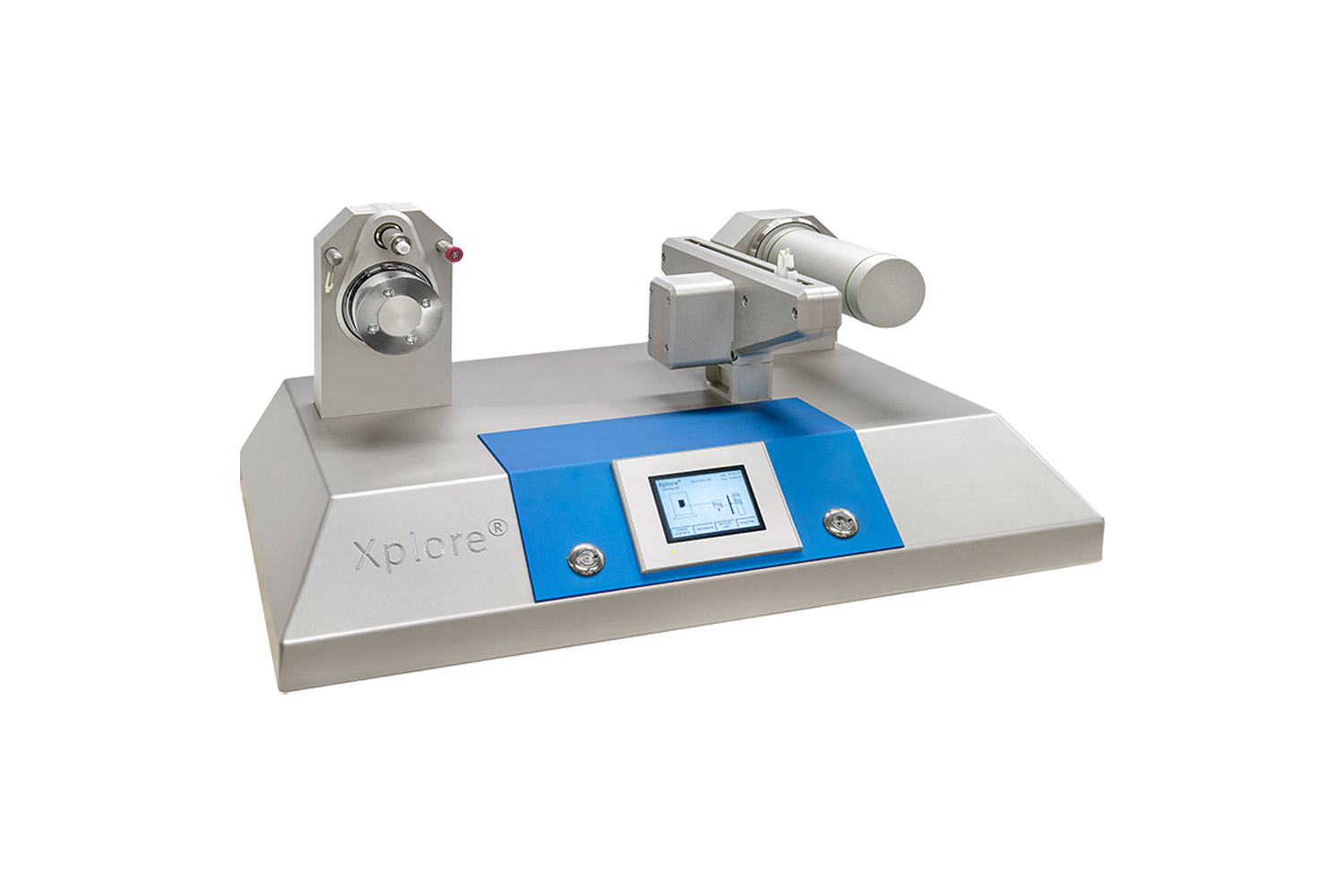
The Xplore Microfiber Line is engineered for the efficient production of fibers from minimal material quantities, requiring only 5 – 10 g of material and 10 – 15 minutes. This system significantly reduces material waste, accelerates development time, and lowers R&D costs while delivering high-quality, representative test fibers for research applications.
Flexible Heating & Spool Compatibility
Accommodates various spool types and offers radiative and conductive heating options for optimal fiber processing.
Precise Stretching & Conditioning
Controls fiber drawing speed, ratio, and temperature, supporting both hot and cold stretching processes.
Talk to an Instrumentation Specialist Today!
Rapid Fiber Development & Reduced Waste
The Xplore Microfiber Line is a tunable winding unit that enables high-speed drawing and controlled winding of fibers directly from Xplore Micro-compounders. This system enables rapid and efficient production of polymer fibers using as little as 5 – 10 grams of material, with typical processing times of 10 – 15 minutes. This highly material-efficient approach significantly reduces waste, development time, and overall R&D costs, making it ideal for experiments involving limited quantities or high-value additives. Designed for laboratory-scale research, the system produces representative mono- and multi-filament fibers with minimal input, supporting formulation screening, process optimization, and material characterization.
Xplore Micro Fiber Line
Product Features
Advanced Features and Configurability:
The system is built with a robust anodized and nickel-plated finish, ensuring durability and stable operation in laboratory environments. A range of optional components further enhances functionality and application flexibility, including interchangeable fiber dies, including multi-filament dies, quench box for controlled fiber cooling, wetting unit for surface treatment or processing optimization and continuous forced feeding kit with volumetric feeder and water-cooled hopper for extended operation.
Programmable Startup Sequence:
The system includes a programmable slow startup function, which gradually initiates fiber drawing to prevent filament breakage and improve overall process stability during stretching.
High-Speed and Low-Rate Conditioning:
The fiber line features a high-speed winding unit paired with a low-rate conditioning unit for enhanced fiber properties through controlled post-drawing. The conditioning unit allows precise control of fiber drawing speed, draw ratio, and temperature, supporting both hot and cold stretching with independently speed-controlled godets.
Key features include controlled supply, and take-up rolls for consistent fiber handling, adjustable winder godet speed from 0.5 to 90 m/min, traverse guides with programmable lateral motion, enabling filament overlap pitch from 0.1 mm to 4.0 mm and accommodation of 75 mm cardboard bobbins.
Continuous Fiber Production:
An optional continuous feed kit allows for exceptionally long fiber production without additional pumping equipment. The micro-compounder’s throughput control ensures consistent fiber diameter throughout the run.
Xplore Micro Fiber Line
Accessories
Winding Unit
The winding unit enables high-speed drawing and controlled winding of fibers directly from Xplore Micro-Compounders. It supports both mono- and multifilament fiber production, ensuring consistent fiber formation and collection.
The godet rolls offer precise speed control, with continuous digital adjustment from 1 to 200 m/min. Speed settings are displayed in real time, with fine adjustment increments down to 1 cm/min, enabling highly accurate control over fiber drawing conditions. Each godet roll incorporates advanced internal air cooling and a polished nickel surface, ensuring consistent thermal management and smooth fiber handling.
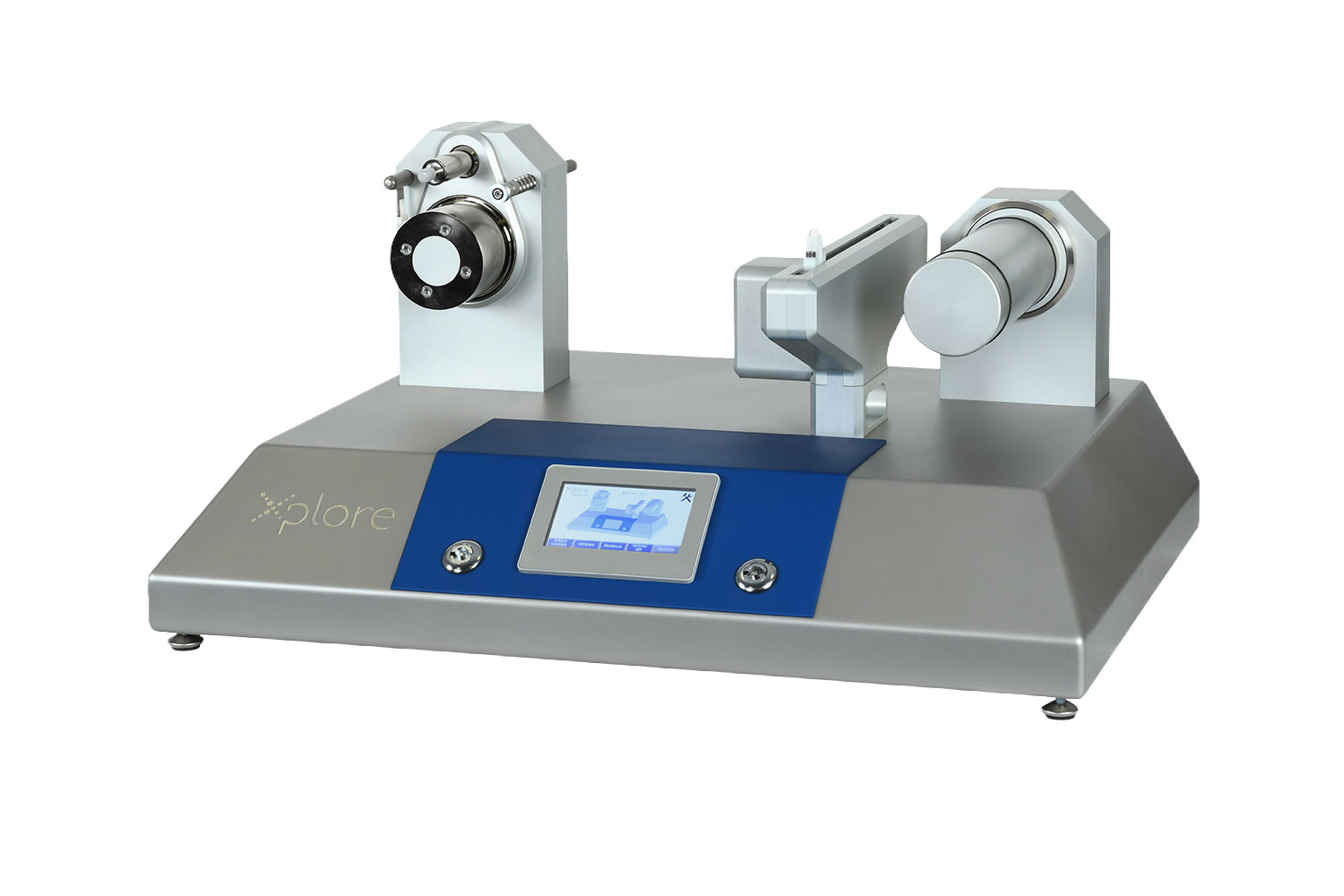
The traverse guide and winding system provide continuously adjustable torque from 0 to 250 N·mm, with real-time torque display for precise control during fiber collection. During operation, the system allows accurate control of filament pitch, with spacing between adjacent mono- or multi-filaments adjustable from 0.1 mm to 4 mm, enabling tailored winding patterns and consistent fiber placement.
Fiber Conditioning Unit
A separate conditioning unit provides flexible post-processing capabilities, allowing precise control over key parameters such as draw ratio, draw temperature and winding speed. This enables researchers to tailor fiber properties and study the relationship between processing conditions and final fiber performance.
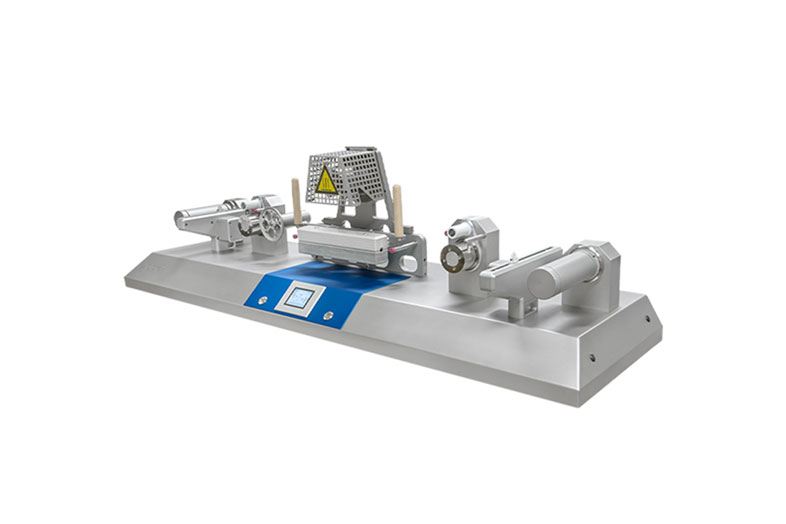
The conditioning unit consists of a supply godet roll and a take-up godet roll, integrated with two traverse guides and a thermo-regulated hot shoe, enabling precise control over fiber drawing speed, draw ratio, and temperature. The system can be configured for both hot and cold stretching of mono- and multifilament fibers, providing flexibility across a wide range of materials and processing conditions. Both godet rolls are equipped with advanced internal air cooling and feature a smooth, polished nickel surface, ensuring stable thermal management, consistent fiber handling, and reproducible stretching performance.
Multifilament Die (MFD) & Quench Box
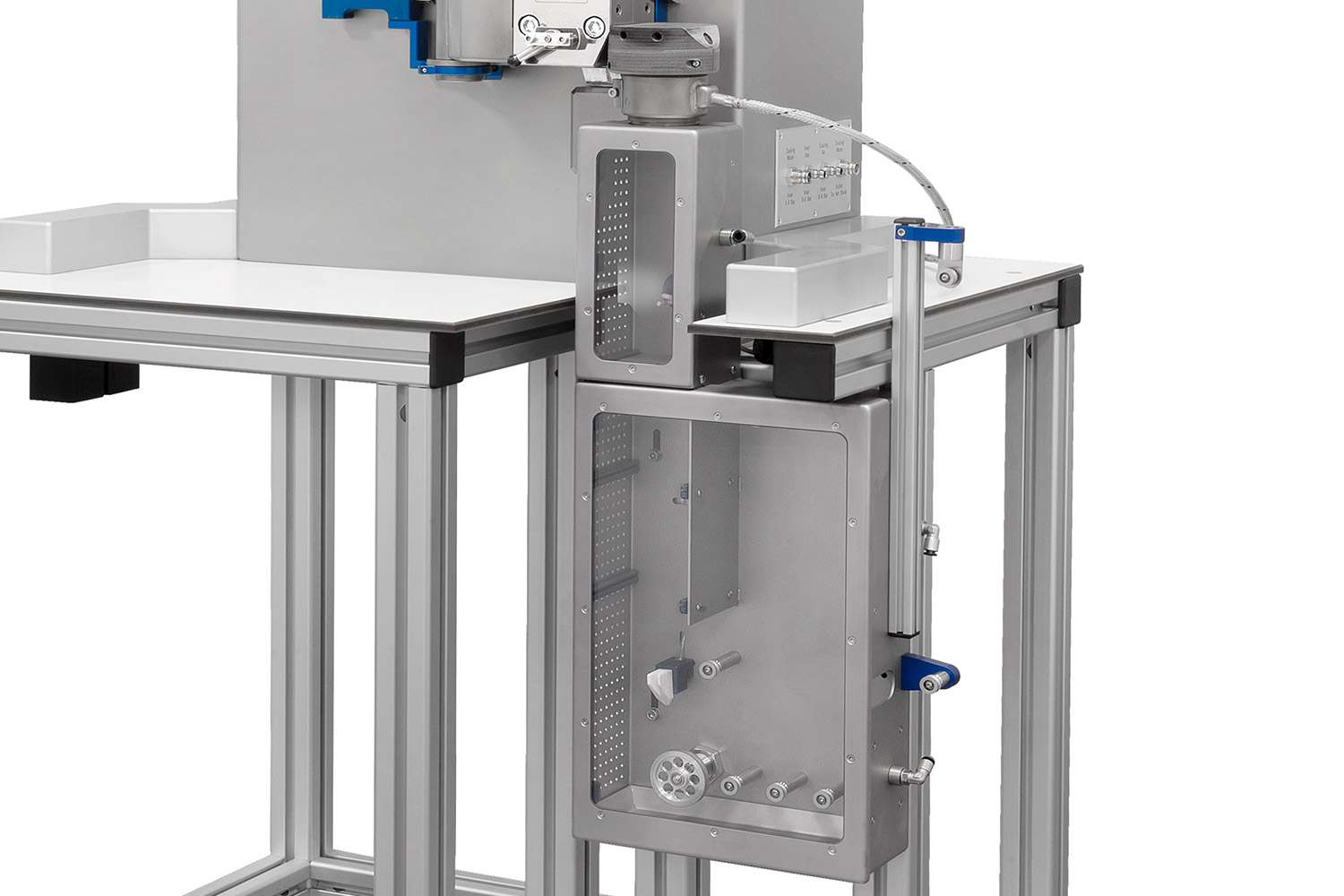
The optional Multifilament Die enhances fiber capabilities by providing a vertical die outlet with twelve openings, enabling efficient multi-filament production. This system is coupled with the Quench Box which features controlled fiber cooling, a fiber wetting unit for surface treatment, and a melt strength measurement system to monitor fiber properties in real time. This system delivers precise production and is ideal for advanced R&D and material development applications.
Xplore Micro Fiber Line
Product Knowledgebase
Webinar
Advancing Thermoplastic Composite Research with Modular Small-Scale Processing
Thermoplastic composites are rapidly gaining ground across industries demanding lightweigh…
How Micro-compounders Enable Precise and Repeatable Color Matching in Polymers
Color matching in polymer compounding involves formulating and adjusting pigments, dyes, a…