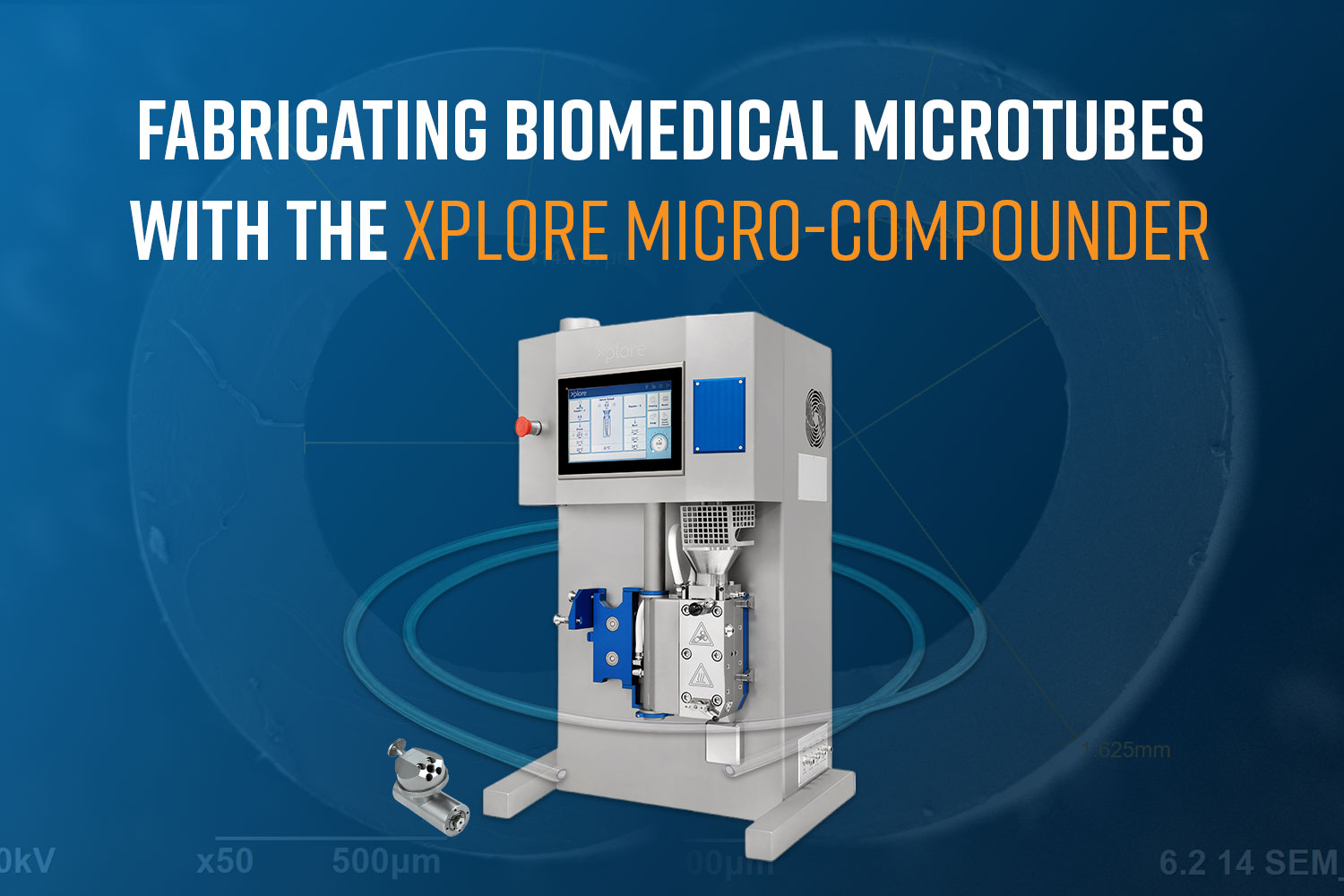
Thin-walled polymer microtubes are used in biomedical devices for applications such as wound drainage, glaucoma treatment, and fluid management. Developing these tubes requires precise dimensional control and polymers with properties suited to their intended use. The Xplore micro-compounders, combined with a dedicated micro-tube extrusion die, enables researchers to develop customized polymer formulations and fabricate continuous microtubes at laboratory scale. This approach supports rapid material screening while minimizing sample consumption. In a demonstration using biomedical-grade thermoplastic polyurethane (TPU), the system produced microtubes with an outer diameter as small as 170 µm and a wall thickness of 45 µm.

Why Use Micro-Extrusion for Biomedical Tubing?
Microtubes play an important role in biomedical applications where precise fluid transport, compact dimensions, and controlled material properties are essential. They are used in wound drainage systems to remove blood and other fluids from surgical sites, helping support healing, and in glaucoma drainage devices to reduce intraocular pressure and help prevent damage to retinal ganglion cells. Microtubes are also relevant to drug delivery, catheter systems, diagnostic devices, and microfluidic platforms, where they enable fluid handling within small spaces.1 Depending on the application, these components may require specific outer diameters, wall thickness, flexibility, mechanical strength, and biocompatibility. Developing microtubes from tailored polymer formulations allows researchers to investigate how material composition and tube geometry influence performance and suitability for specific biomedical applications.
Microtubes can be fabricated using several techniques, including dip-coating, solution-based processing, micro-injection molding, and melt extrusion, depending on the required dimensions, material properties, and production scale.2 Dip-coating involves applying a polymer solution to a mandrel but can present challenges in controlling wall thickness and requires solvent handling. Solution-based techniques offer flexibility in material selection but may require solvent removal and additional processing steps. Micro-injection molding is suitable for producing complex, repeatable geometries, although specialized tooling can limit flexibility during early-stage research. Conventional extrusion supports continuous tube production but may require larger material quantities and equipment designed for higher throughput.
In comparison, the Xplore micro-compounder combined with a micro-tube extrusion die provides an integrated, small-scale platform for preparing customized polymer formulations and extruding continuous microtubes. Its low material requirements and high-shear compounding capabilities make it particularly useful for screening polymers and additives, while adjusting extrusion parameters such as take-up speed enables researchers to investigate their effects on tube diameter and wall thickness. This approach is especially valuable during R&D, when material conservation, formulation flexibility, and process optimization are priorities.
The Xplore Micro-Compounder and Micro-Tube Die
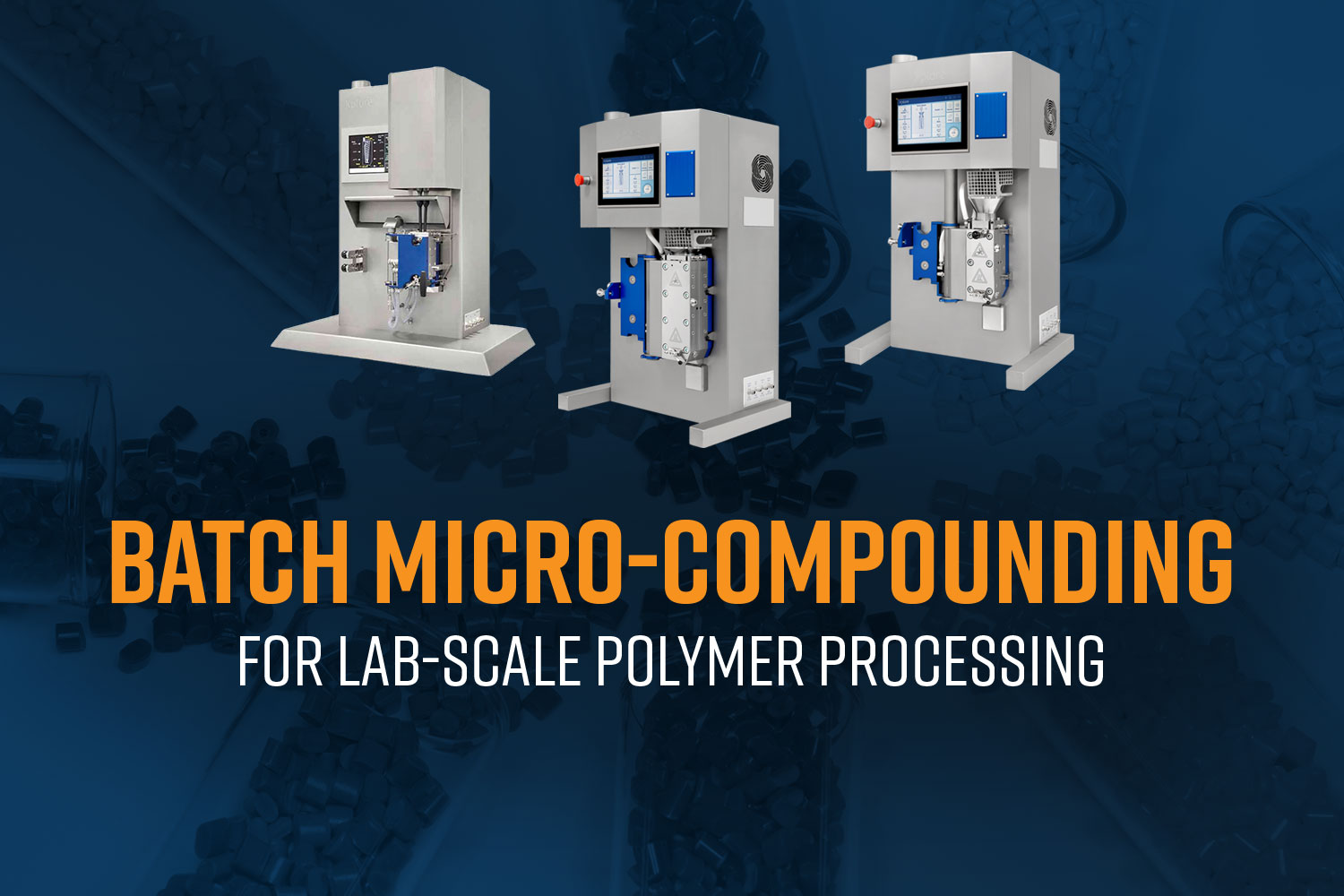
The Xplore micro-compounder is a laboratory-scale polymer processing system designed for formulation development, material screening, and small-batch compounding. Its small processing volume and tunable mixing capabilities enable researchers to rapidly evaluate customized polymer formulations while minimizing material consumption, making it particularly valuable when working with expensive polymers, nanoparticles, or functional additives. Compared with conventional twin-screw compounders and production-scale extrusion systems, Xplore micro-compounders offer a compact, material-efficient alternative for early-stage R&D, where rapid formulation changes and process optimization are priorities rather than high throughput.
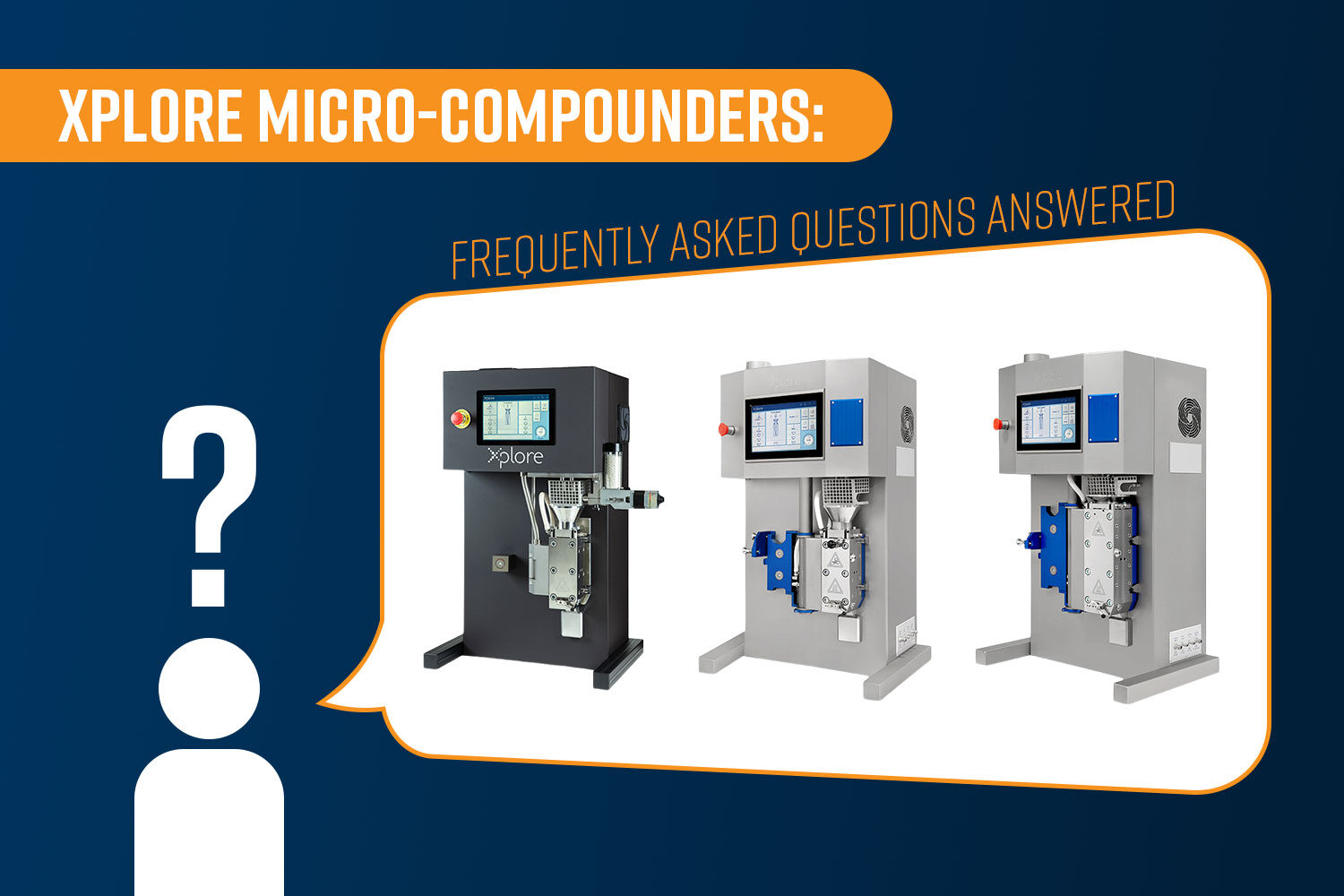
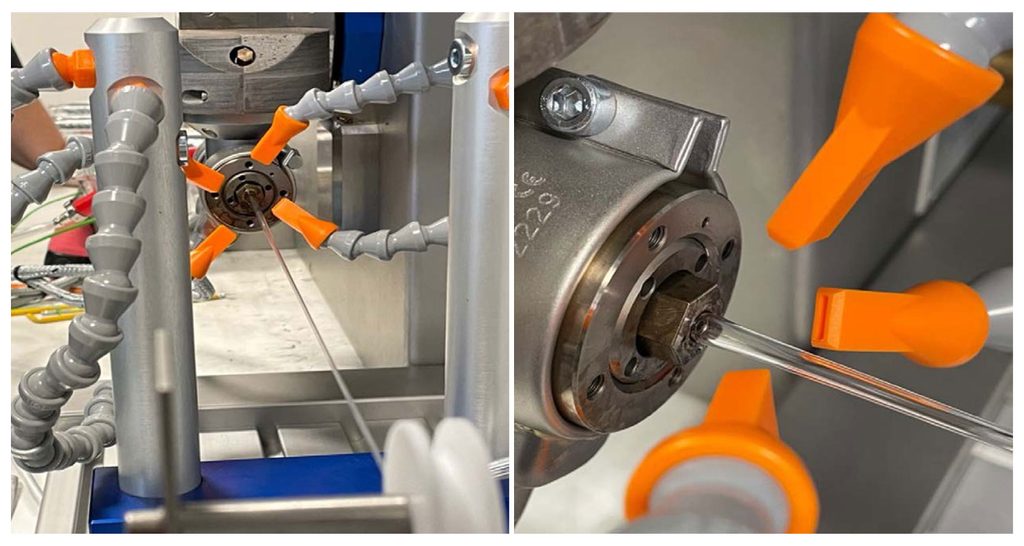
The Xplore micro-tube extrusion die is designed for use with the MCX, MC 15 HT and MC 40 micro-compounders, enabling the continuous fabrication of polymer microtubes directly from compounded melts (Figure 1). This configuration allows researchers to develop customized polymer formulations while minimizing material consumption and investigating extrusion parameters, such as take-up speed, influence tube diameter and wall thickness. The die also supports lumen air pressurization, which helps prevent tube walls from collapsing before cooling and stabilization. By combining small-scale compounding with controlled microtube extrusion, the Xplore system provides a flexible platform for screening polymer formulations and developing application-specific tubing for biomedical devices, microfluidics, membranes, and other advanced material applications.
Extruding TPU Microtubes:
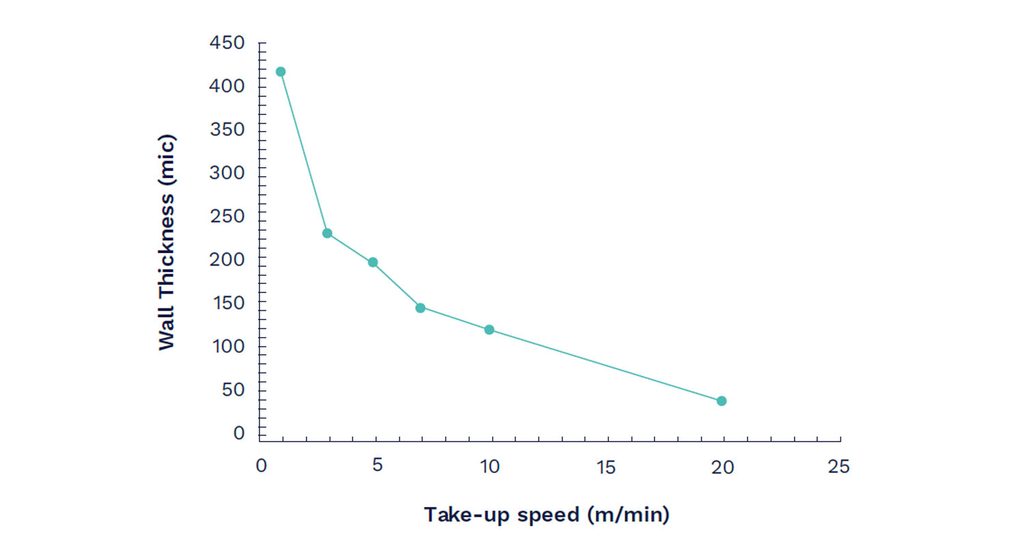
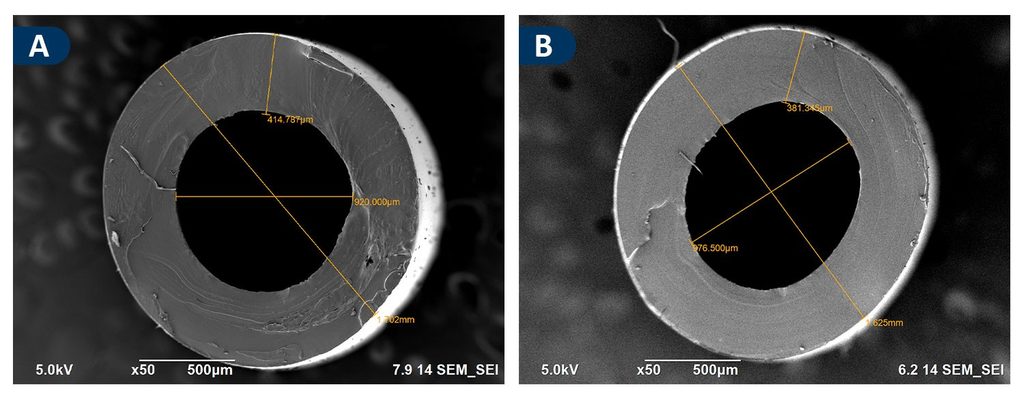
To evaluate the fabrication of microtubes, biomedical-grade thermoplastic polyurethane (TPU) was processed using the Xplore MC 15 HT micro-compounder coupled with a micro-tube extrusion die featuring a 3 mm die opening and a 1.5 mm needle. Both the melt and die temperatures were set to 210 °C, approximately 20 °C above the melting temperature of the TPU. During the experiment, the take-up speed was varied from 1 to 20 m/min while maintaining a constant feed rate and screw speed to isolate its effect on tube geometry. Increasing the speed draws the extruded polymer away from the die more rapidly, stretching the material into a longer length of tubing per unit time. At constant material throughput, this generally reduces both the outer diameter and wall thickness(Figure 2).3 Figure 3 shows representative SEM images microtubes formed at different take-up speeds. At a speed of 1 m/min, the tubes had a diameter of ~1.7 mm and wall thickness of ~ 410 mm. At a take-up speed of ~ 2 m/min, the tube diameter was reduced to 1.6 mm and had a wall thickness of ~380 mm. Conversely, lower take-up speeds typically produce larger-diameter tubes with thicker walls. By adjusting this parameter, researchers can control tube dimensions without changing the polymer formulation or material feed rate, although the final geometry also depends on melt viscosity, die design, and cooling conditions. In this study, the system successfully produced microtubes with an outer diameter as small as 170 µm and a wall thickness of 45 µm, demonstrating the potential of the Xplore micro-compounding and extrusion platform for developing thin-walled, submillimeter tubing for biomedical and other advanced applications.
Conclusion
The Xplore micro-compounder combined with a micro-tube extrusion die enables researchers to fabricate continuous, thin-walled polymer microtubes without requiring large quantities of material while investigating the effects of processing parameters on tube geometry. Researchers can compound a candidate formulation, extrude microtubes, adjust processing parameters, and characterize the resulting material within a semi-automated laboratory-scale workflow. This offers a flexible approach to formulation screening and micro-extrusion process development and enables the rapid development of biomedical tubing, microfluidic components, membranes, or functional polymer materials.
References
- Luchnikov, V., Lonov, L., & Stamm, M. (2011). Self‐Rolled Polymer Tubes: Novel tools for microfluidics, microbiology, and Drug‐Delivery Systems. Macromolecular Rapid Communications, 32(24), 1943–1952. https://doi.org/10.1002/marc.201100482 ↩︎
- Wang, S., & Cai, L. (2010). Polymers for fabricating nerve conduits. International Journal of Polymer Science, 2010, 1–20. https://doi.org/10.1155/2010/138686 ↩︎
- Wei, Y., Bai, J., Zhao, H., Wang, R., & Li, H. (2022). Study on the extrusion molding process of polylactic acid micro tubes for biodegradable vascular stents. Polymers, 14(22), 4790. https://doi.org/10.3390/polym14224790 ↩︎