Characterizing ultrathin films often requires accurate measurement of two interdependent fundamental optical properties: film thickness (d) and refractive index (n). An independent measurement or assumption about either the refractive index or film thickness is required before the other parameter can be determined accurately. This becomes a substantial problem for thin films whose properties differ from those of the bulk material. The refractive index of an immobilized polymer, for example, may not be identical to the value reported for the bulk material. Also, the RI of a biological or polymeric layer can depend on film thickness, hydration, concentration, molecular organization, pH, or the method used to immobilize it on a surface.
Multi-Parametric Surface Plasmon Resonance (MP-SPR) provides an alternative approach. By measuring the complete SPR response at multiple wavelengths, MP-SPR can determine both film thickness and refractive index without requiring prior knowledge of either parameter.1 This approach exploits the wavelength dependence of refractive index, or optical dispersion, to resolve the ambiguity associated with a single-wavelength measurement. MP-SPR has been demonstrated to be able to measure the thickness of thin films from Ångströms up to microns.2 3 This ability of MP-SPR has potential applications in the characterization of antifouling coatings, determining the optical properties of deposited or immobilized polymers, characterizing surface-bound biomaterials and hydrated layers, measuring thickness of lipid bilayers and investigating changes in surface-bound materials under different chemical conditions

How MP-SPR Measures Thin Films
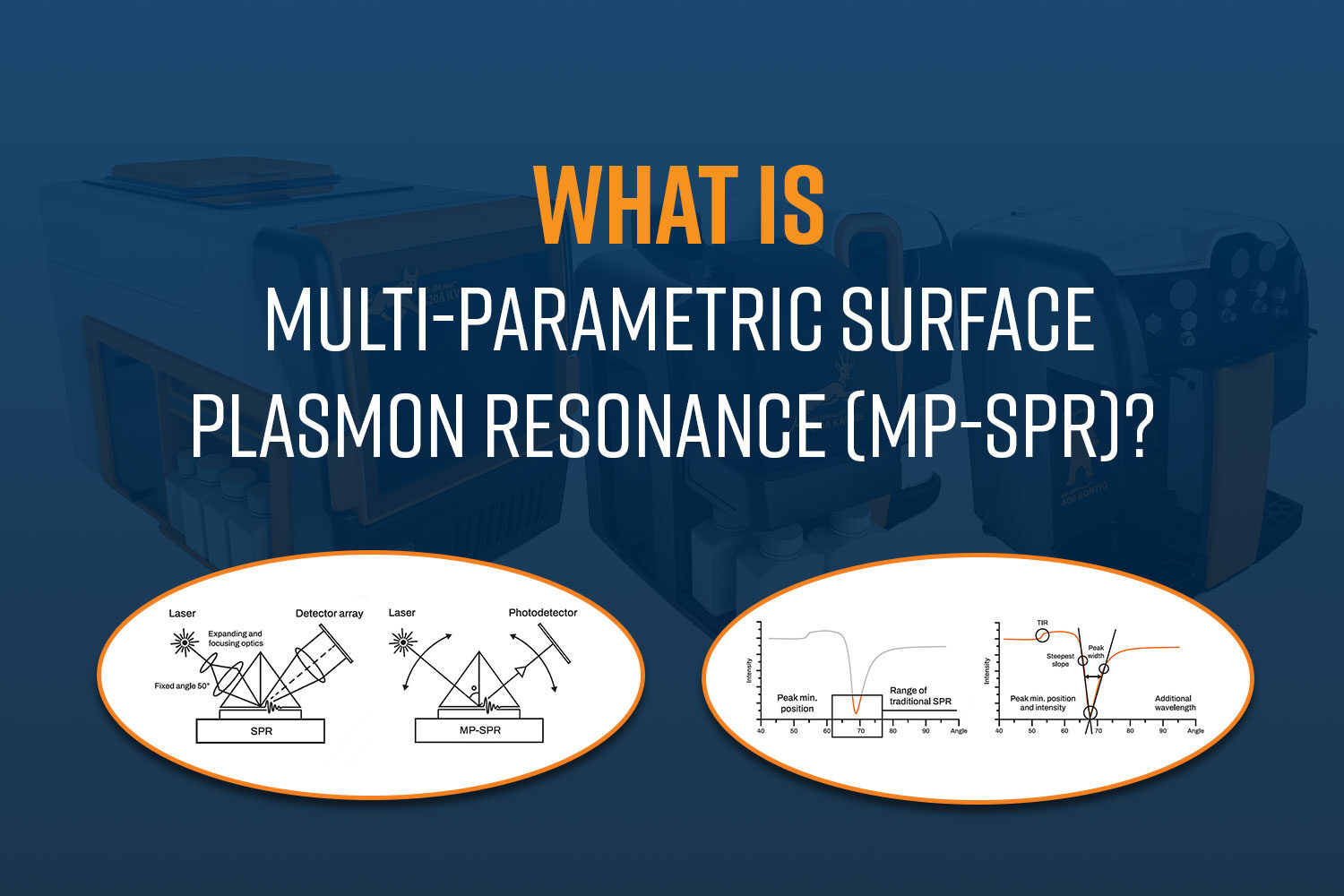
Surface Plasmon Resonance (SPR) is an optical phenomenon wherein polarized light is directed at a metal surface, typically gold, over a range of incident angles. At a particular angle, the incident light couples to surface plasmons, producing a characteristic minimum in the reflected light intensity. The position of this SPR minimum is highly sensitive to the optical properties of the material adjacent to the metal surface. When a thin film is deposited onto the sensor surface, it changes the local dielectric environment. This causes the SPR response to shift. Monitoring this shift allows changes at the surface to be detected and characterized.
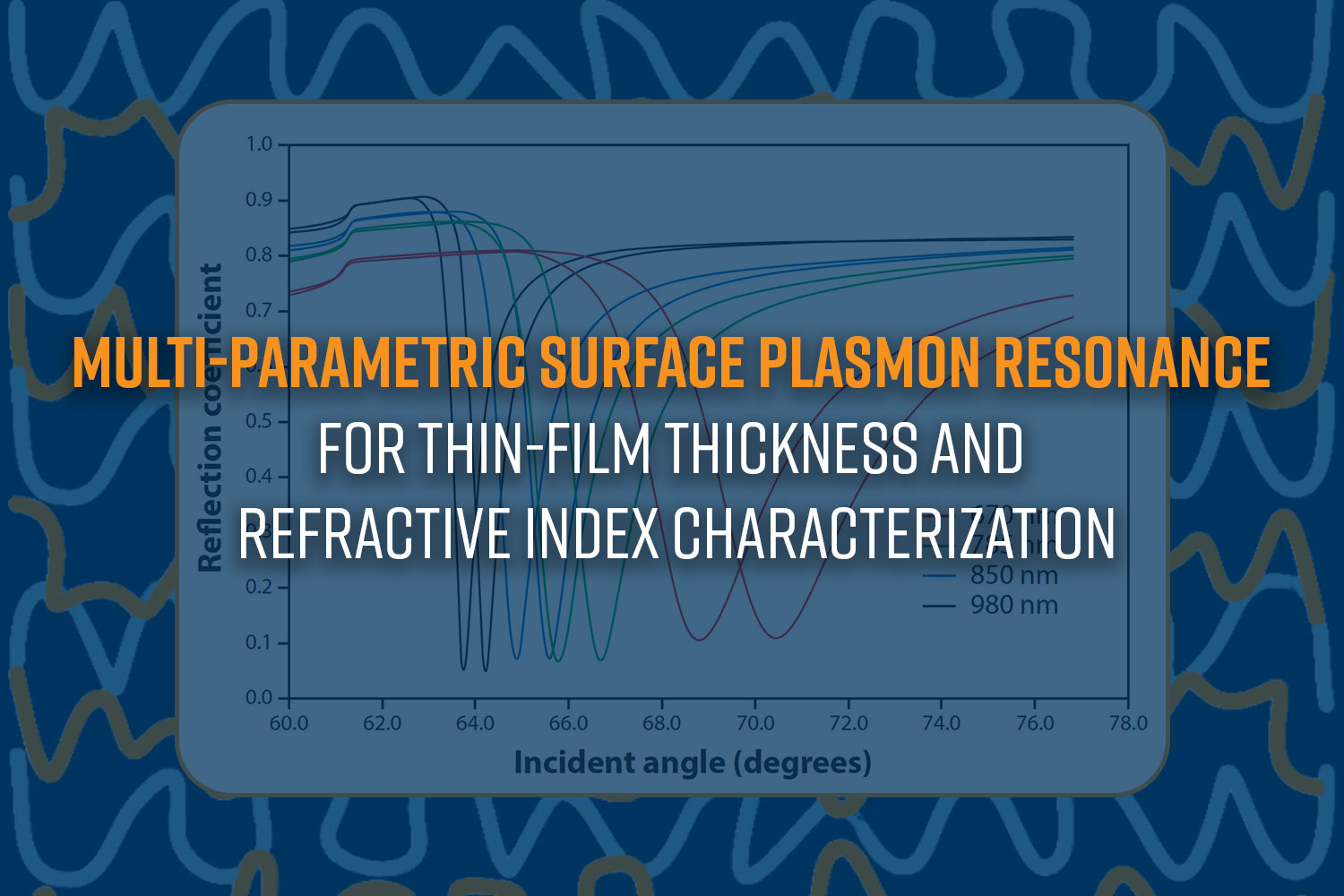
MP-SPR extends conventional SPR by measuring the complete SPR curve at multiple wavelengths. This additional optical information provides the basis for separating the effects of film thickness and refractive index. MP-SPR uses up to four wavelengths of light, for example 670, 785, 850 & 980 nm. The resulting difference between the optical response at the different wavelengths provides an additional constraint that allows thickness and refractive index to be separated.
Measuring a Polyelectrolyte Multilayer
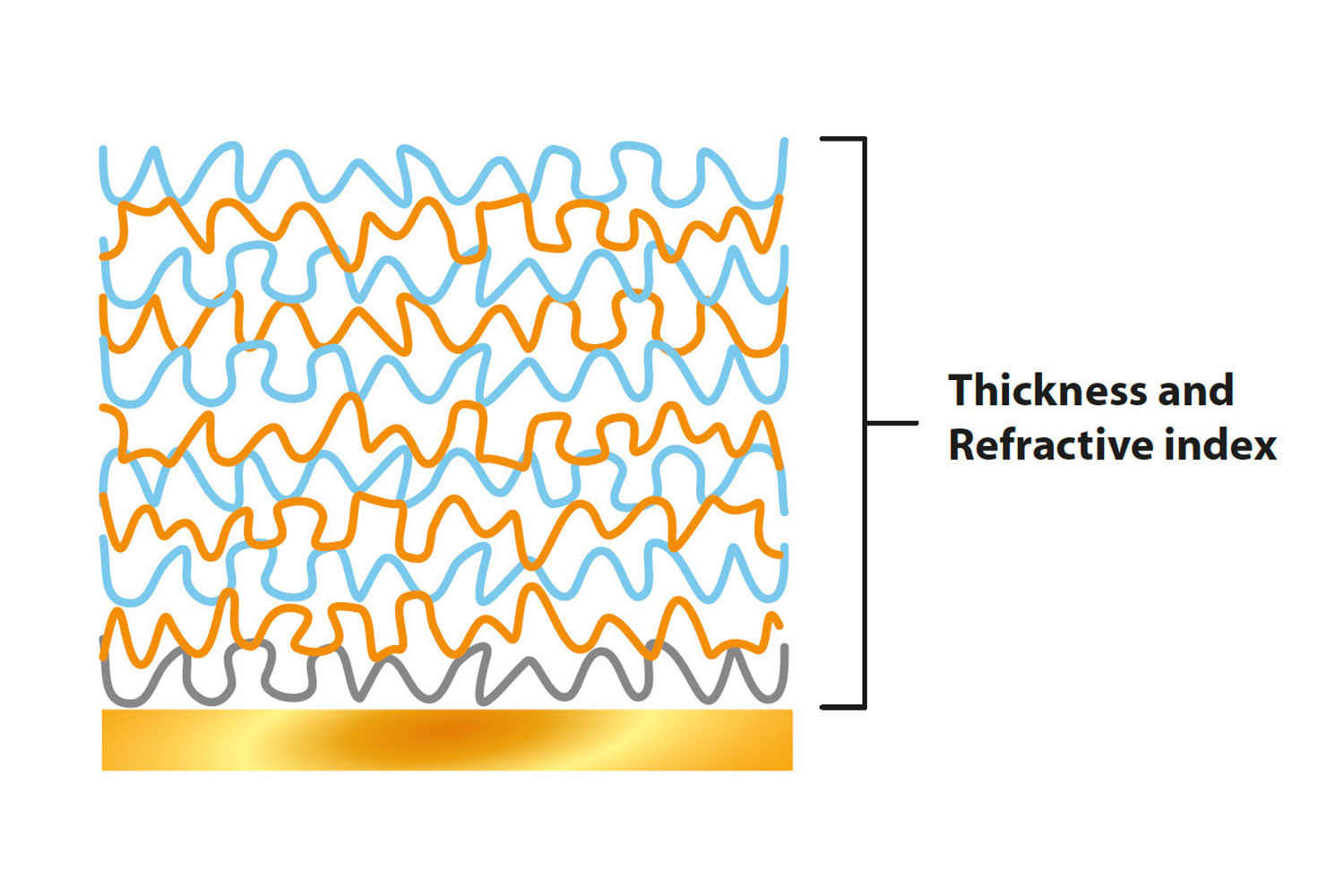
A polyelectrolyte multilayer provides a useful example of how MP-SPR can characterize thin-film growth. In this experiment, a multilayer structure was deposited in situ onto a standard gold SPR sensor. The deposition began with a positively charged poly(ethyleneimine) (PEI) layer, followed by alternating layers of negatively charged poly (sodium 4-styrenesulfonate) (PSS) and positively charged poly (allylamine hydrochloride) (PAH). The alternating deposition of oppositely charged polyelectrolytes produces a multilayer structure whose thickness increases with each deposition cycle (Figure 1).
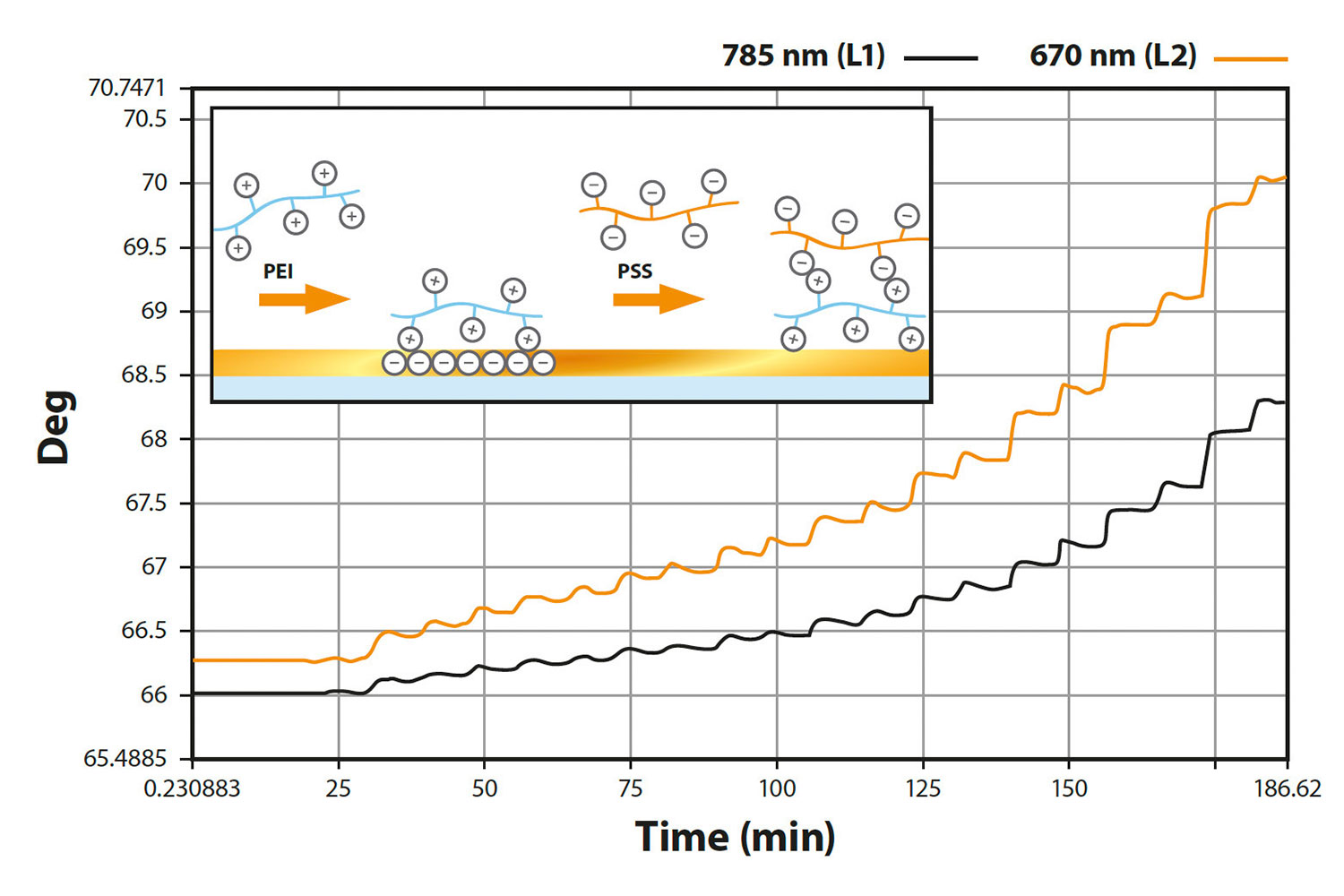
Because MP-SPR continuously monitors the SPR response, the growth of the film can be followed in real time. Changes in the SPR curve provide information about the deposition of each successive layer (Figure 2).
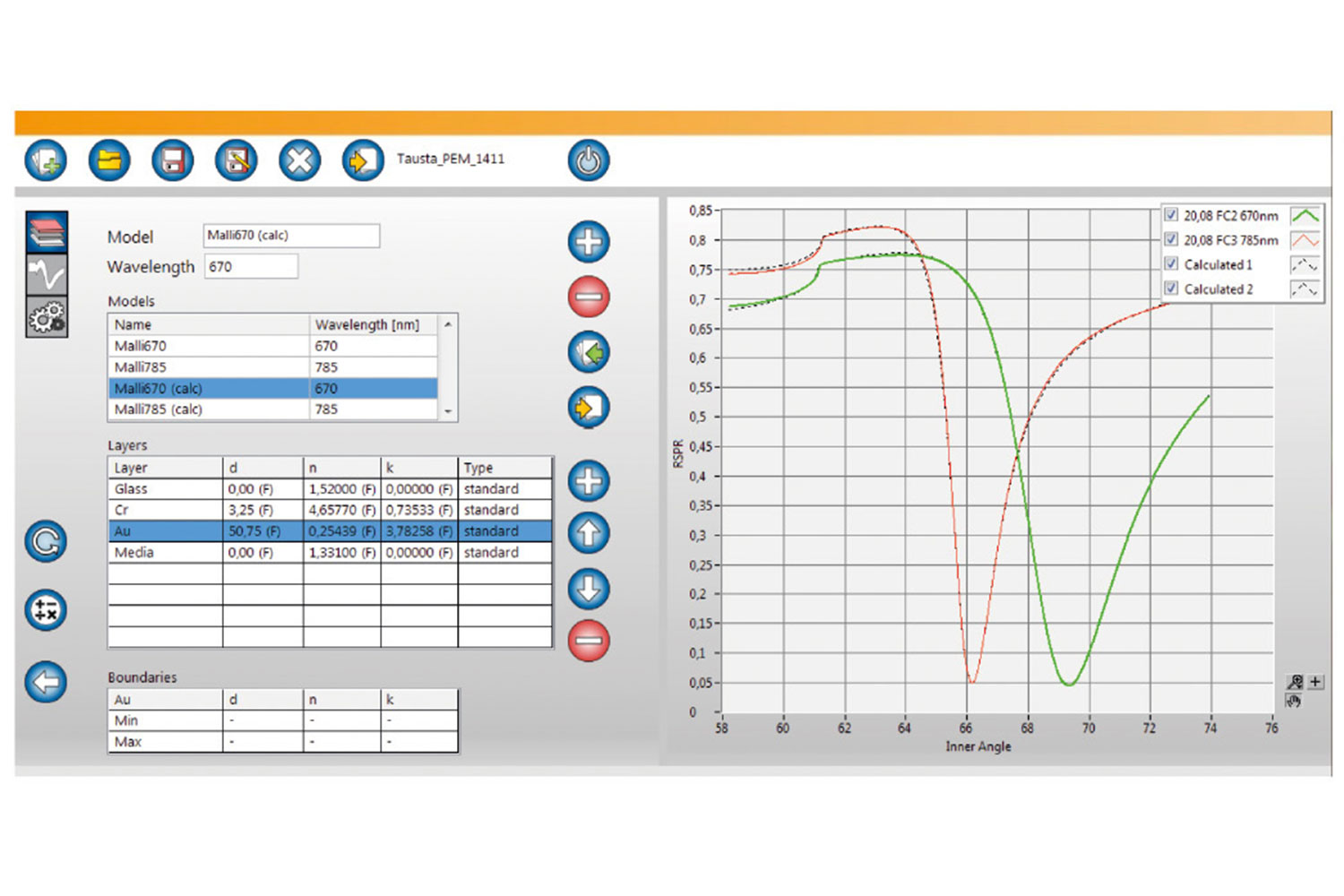
Complete SPR curves were measured at 670 and 785 nm. The resulting data were analyzed using the MP-SPR Navi LayerSolver optical fitting software. The software models the measured SPR response while varying the refractive index and thickness of the deposited layer (Figure 3). LayerSolver generates the RI-thickness relationship for each wavelength. One of the resulting curves is shifted according to the expected wavelength dispersion of the material. The point where the two relationships intersect represents the unique solution for both refractive index and film thickness.
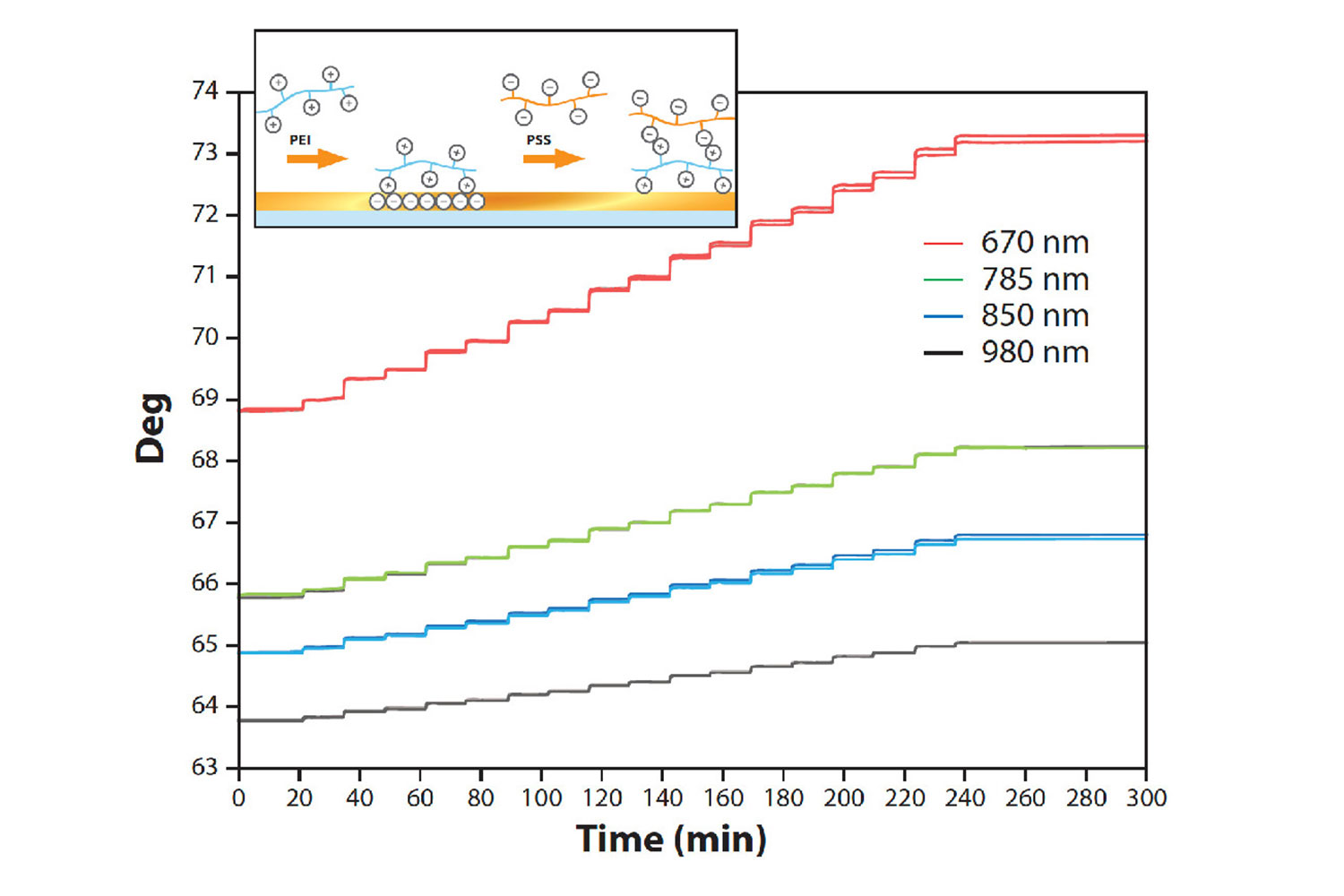
In a related study, the formation of polyelectrolyte multilayers (PEMs) was investigated using a four-laser MP-SPR system. Measurements at four wavelengths provide further spectral information, enabling more comprehensive analysis of wavelength-dependent optical properties and potentially improving the robustness of model fitting. The additional wavelengths can help assess the consistency of the optical model and characterize materials with more complex dispersion behavior. The multilayer structure consisted of an initial positively charged poly(ethyleneimine) (PEI) layer, followed by alternating layers of negatively charged poly (sodium 4-styrenesulfonate) (PSS) and positively charged poly (allylamine hydrochloride) (PAH).
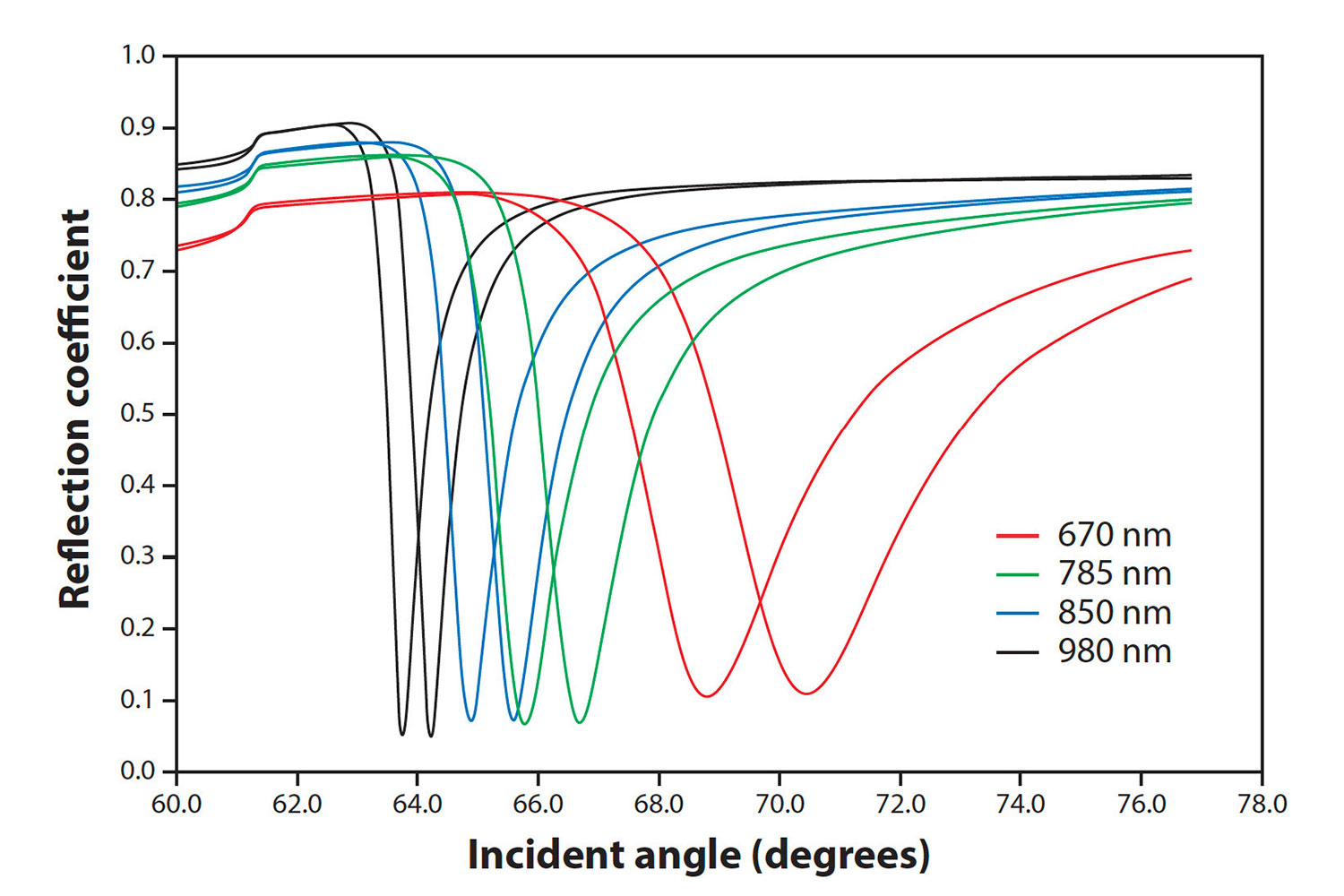
SPR sensograms were acquired in angular scan mode, enabling the collection of complete SPR curves at each time point (Figure 4). Following each PAH injection, the film thickness and refractive index were determined to quantify the angular shift associated with each PEM bilayer (PSS/PAH). This approach enabled the sequential monitoring of multilayer growth through eight bilayers. The resulting sensogram illustrates the adsorption process and progressive buildup of the PEM structure (Figure 5).
Advantages of MP-SPR for Thin-Film Characterization
The ability to determine both refractive index and thickness from the same optical measurement provides several advantages.
Prior knowledge of RI or thickness is not required: Unlike methods that require one parameter to be known independently, the two-wavelength MP-SPR approach can determine both parameters from the measurement.
Real-time monitoring: Because MP-SPR is an in situ optical technique, film deposition and surface modification can be monitored in real time. This provides information about not only the final film but also the formation process.
Compatible with liquid environments: MP-SPR measurements can be performed in liquid without changing the fundamental measurement configuration. This is particularly valuable for hydrated polymers, biomaterials, biological interfaces, and biochemical research.
Suitable for multilayer structures: The technique can characterize multilayer films and monitor their growth sequentially. This makes it particularly relevant to layer-by-layer assembly, polymer coatings, and functionalized surfaces.
Broad thickness range: MP-SPR-based approaches have been demonstrated for films ranging from angstrom-scale layers to films several micrometers thick, making the technique applicable across a broad range of thin-film research.
Conclusion
Accurate characterization of ultrathin films requires more than simply detecting that material has accumulated on a surface. For many applications, both film thickness and refractive index are important, yet these parameters are inherently coupled in optical measurements. Multi-Parametric Surface Plasmon Resonance addresses this challenge by measuring complete SPR curves at multiple wavelengths. The additional optical information enables the thickness and refractive index of a thin film to be determined simultaneously without requiring prior knowledge of either parameter.
This capability makes MP-SPR particularly valuable for thin-film research, functional coatings, polymer and biomaterial characterization, multilayer assembly, and biological surface studies, where material properties can differ substantially from bulk values and where real-time measurements in liquid are often essential.
References
- Liang, H.; Miranto, H.; Granqvist, N.; Sadowski, J. W.; Viitala, T.; Wang, B.; Yliperttula, M. Surface plasmon resonance instrument as a refractometer for liquids and ultrathin films. Sensors and Actuators B Chemical 2010, 149 (1), 212–220. https://doi.org/10.1016/j.snb.2010.05.048. ↩︎
- Granqvist, N.; Yliperttula, M.; Välimäki, S.; Pulkkinen, P.; Tenhu, H.; Viitala, T. Control of the morphology of lipid layers by substrate surface chemistry. Langmuir 2014, 30 (10), 2799–2809. https://doi.org/10.1021/la4046622. ↩︎
- Capasso, C.; Hirvinen, M.; Garofalo, M.; Romaniuk, D.; Kuryk, L.; Sarvela, T.; Vitale, A.; Antopolsky, M.; Magarkar, A.; Viitala, T.; Suutari, T.; Bunker, A.; Yliperttula, M.; Urtti, A.; Cerullo, V. Oncolytic adenoviruses coated with MHC-I tumor epitopes increase the antitumor immunity and efficacy against melanoma. OncoImmunology 2015, 5 (4), e1105429. https://doi.org/10.1080/2162402x.2015.1105429. ↩︎