
Introduction
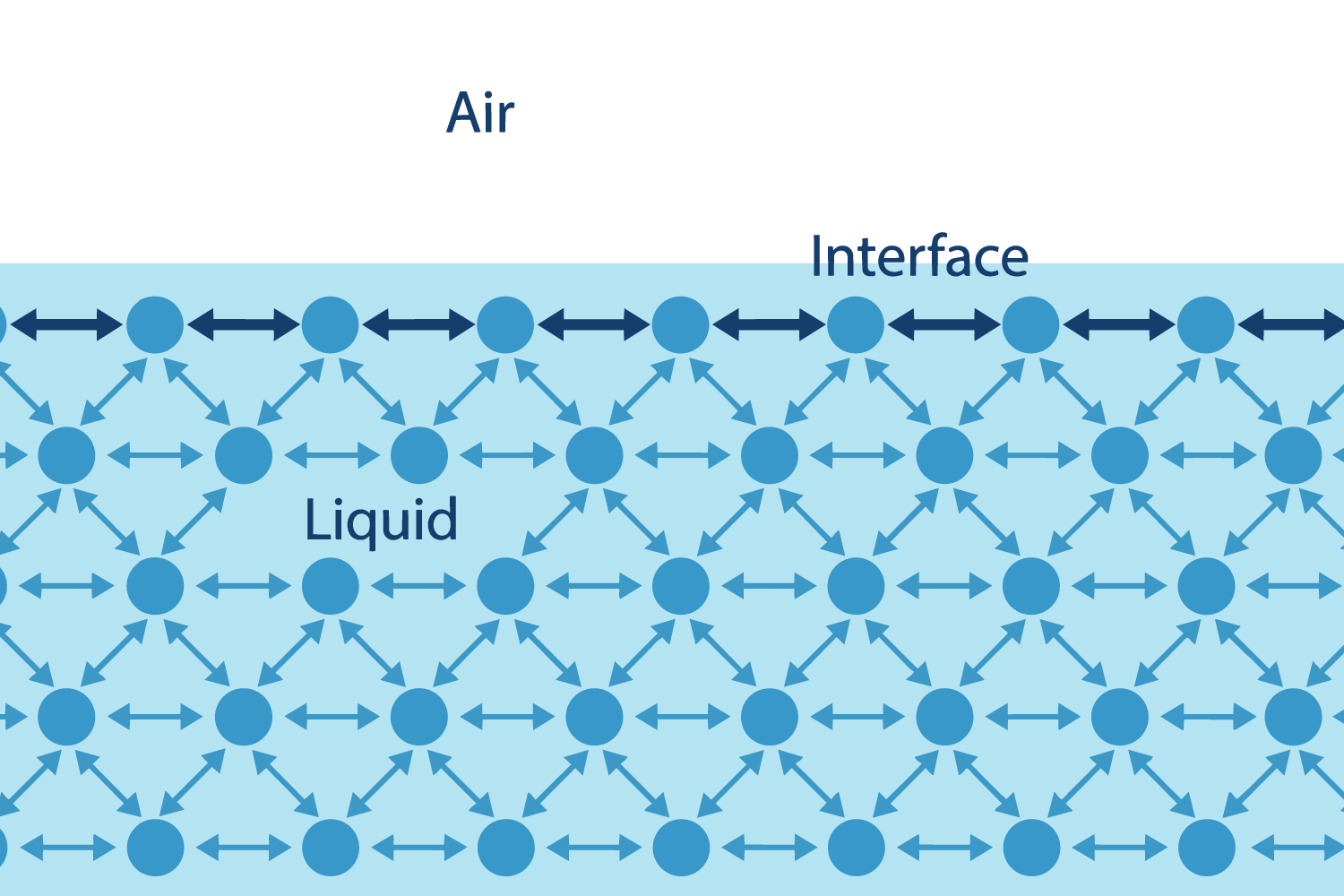
Surface tension influences wetting, spreading, foaming, and emulsification, making it an important parameter in applications ranging from coatings and detergents to inkjet printing, cosmetics, and pharmaceutical formulation. Although surface tension is often treated as a time-independent property, its behavior can be more complex in multicomponent systems containing surfactants, proteins, or polymers. In these systems, surface tension may change significantly over time as different components migrate to and interact at the liquid interface. Understanding these time-dependent effects is essential for optimizing formulations and predicting performance under real processing conditions.
Surface Tension and Surfactants
Adding other components to a liquid can significantly alter its surface tension, particularly when surfactants are introduced. Surfactants are amphiphilic molecules containing both a hydrophilic (water-attracting) head group and a hydrophobic (water-repelling) tail. These molecules preferentially adsorb at interfaces, where their hydrophilic groups interact favorably with the aqueous phase while their hydrophobic groups orient toward the air phase or another nonpolar environment. This adsorption reduces the energetic cost of maintaining the interface and lowers the liquid’s surface tension.
Dynamic Surface Tension
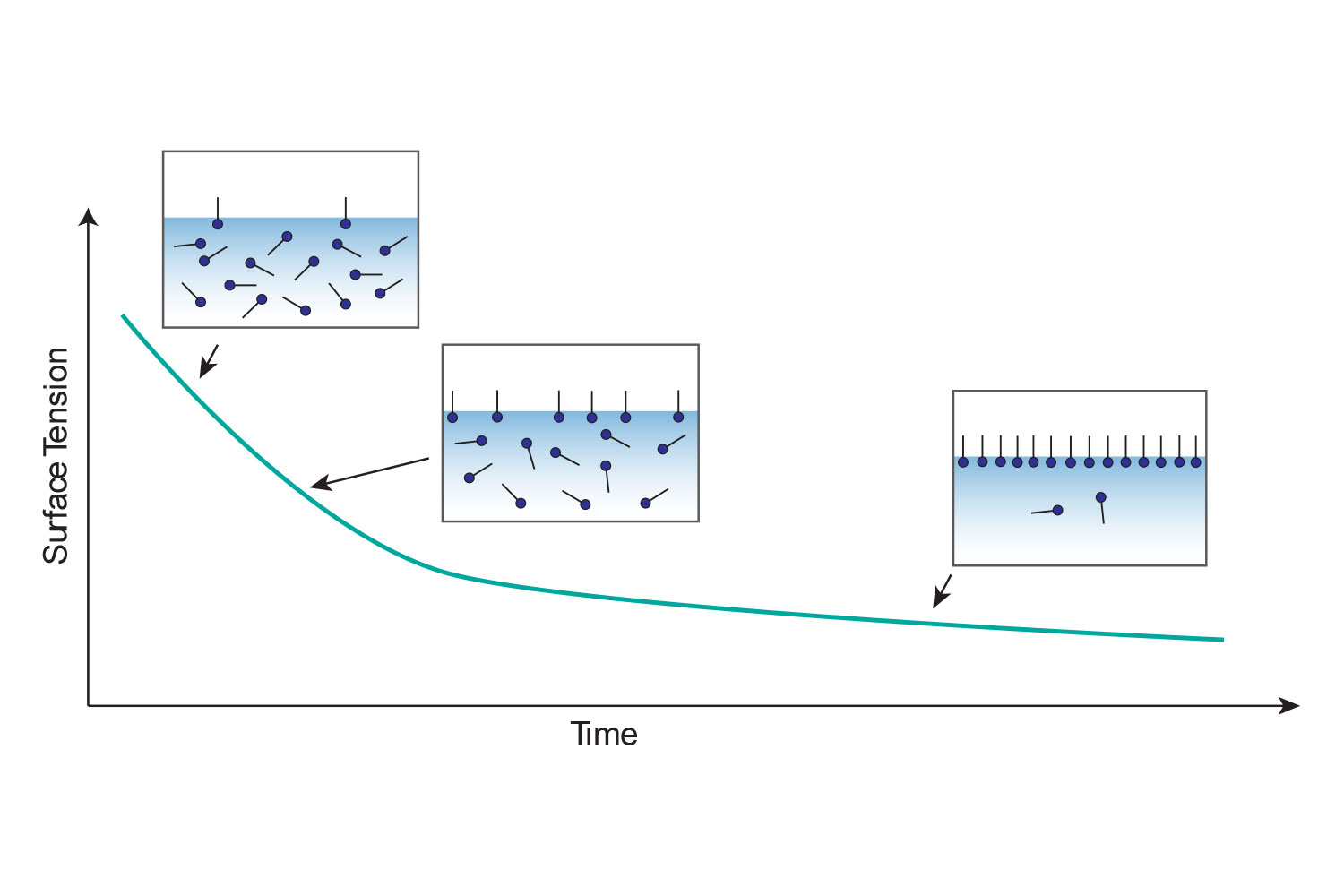
Immediately after a new interface forms, the surface tension may remain close to that of the surfactant-free liquid. As surfactant molecules accumulate at the interface, surface tension decreases until the system approaches equilibrium. This progression, illustrated in Figure 2, demonstrates why surface tension can vary with the time elapsed since interface formation, known as the surface age.
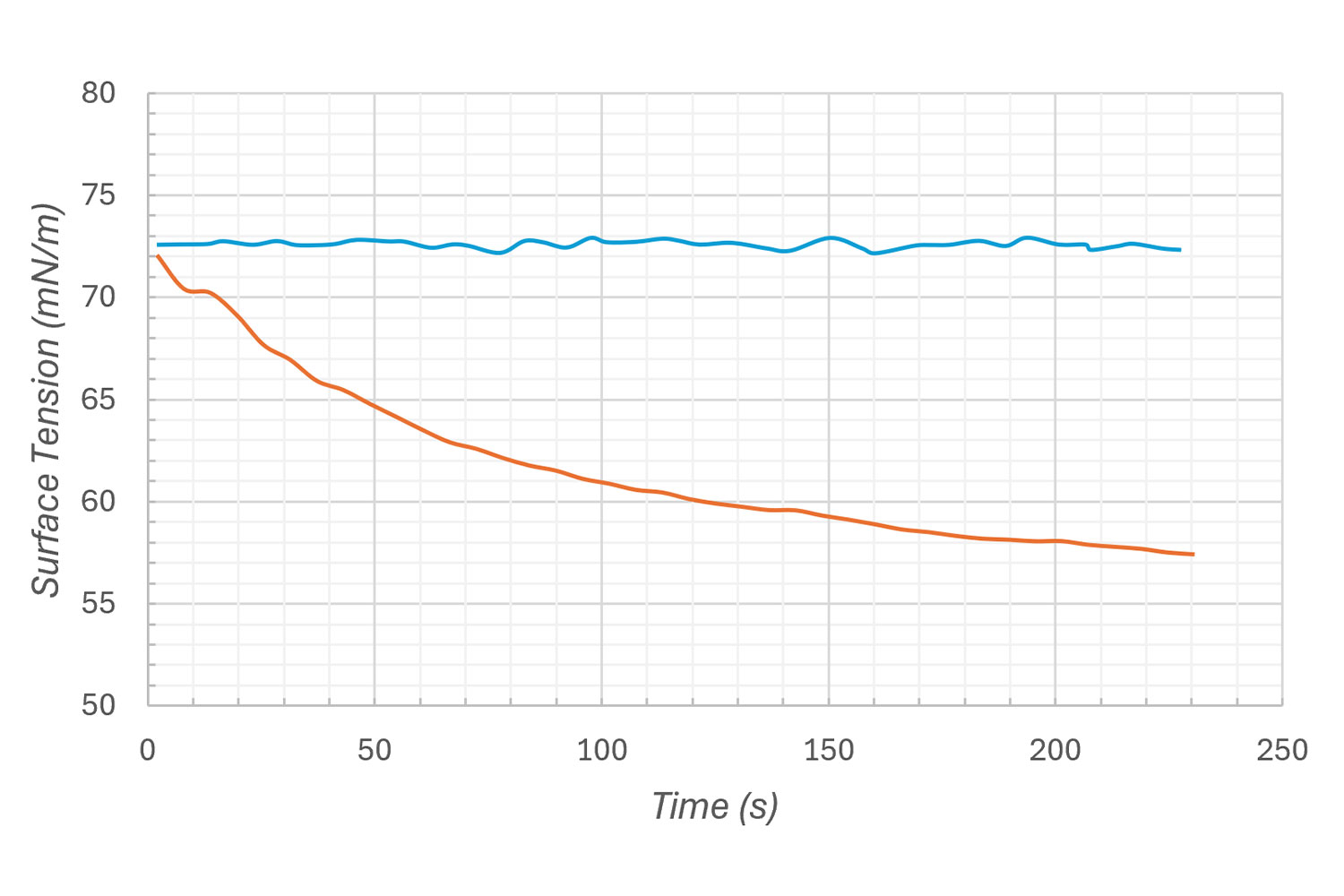
For pure liquids under constant conditions, surface tension is generally independent of surface age once the interface has formed. In surfactant-containing solutions, however, surface tension can vary substantially with surface age, as illustrated in Figure 3. A single equilibrium measurement therefore cannot fully characterize the interfacial behavior of a surfactant solution, particularly when the application involves rapidly forming or renewing interfaces.
This distinction is important in applications where interfaces form and evolve rapidly. For example, during spraying or inkjet printing, newly generated droplets may contact a substrate before surfactant adsorption reaches equilibrium. Similarly, in cleaning and coating processes, the rate at which surface tension decreases can influence wetting, spreading, and overall process performance. Measuring dynamic surface tension therefore provides a more representative assessment of surfactant behavior under application-relevant conditions than an equilibrium measurement alone.
Why is Dynamic Surface Tension Important?
Dynamic surface tension measurements can also provide insight into the adsorption mechanisms of multicomponent surfactant systems. In biopharmaceutical formulations, surfactants are commonly used to stabilize protein-based therapeutics by minimizing unwanted protein adsorption at interfaces and reducing aggregation during manufacturing, formulation, and administration. Surfactants may adsorb more rapidly than proteins at air–liquid or other interfaces, thereby limiting protein adsorption.
How is Dynamic Surface Tension Measured?
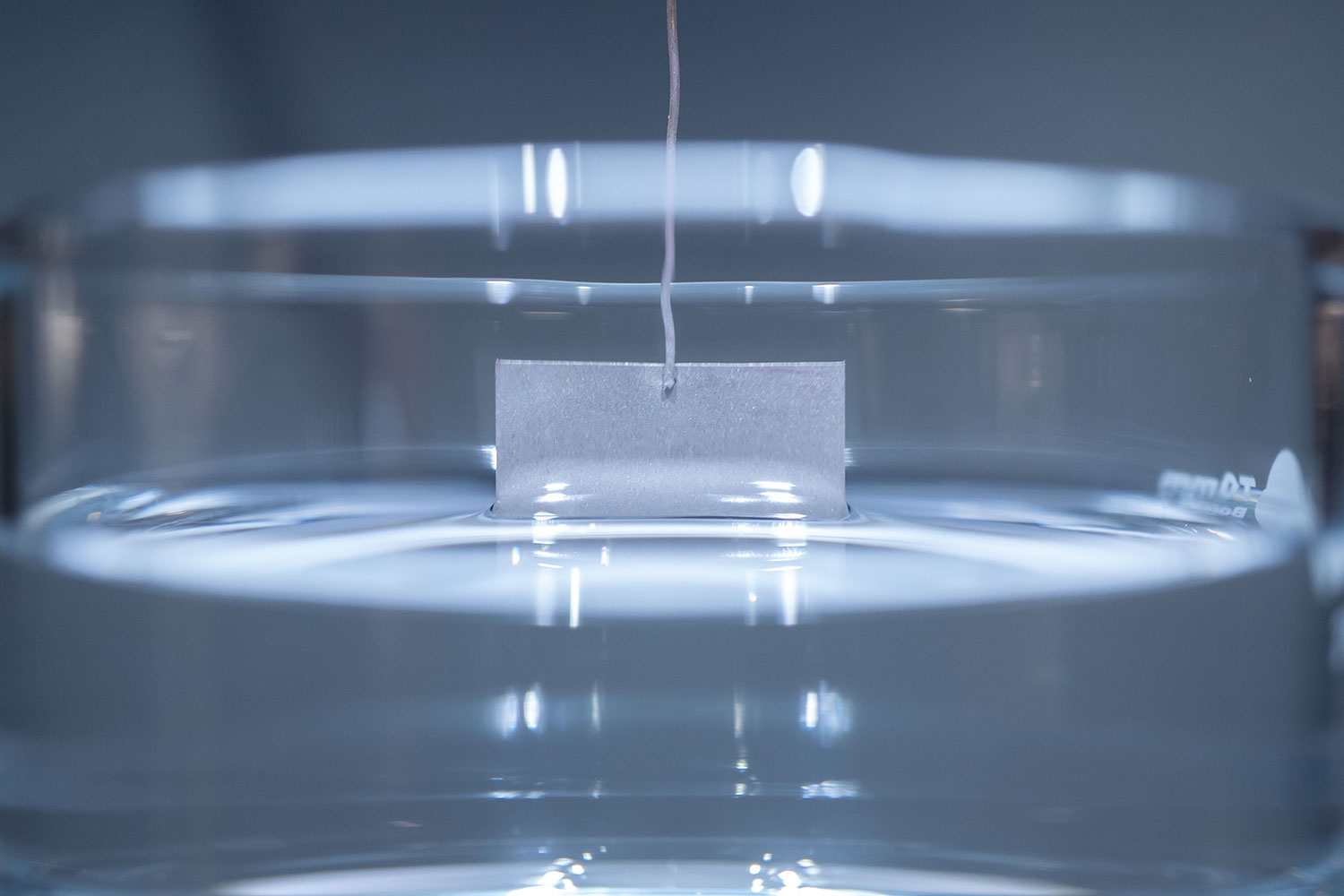
The Wilhelmy plate method is widely used to measure equilibrium surface tension and can also monitor changes in surface tension over time. Using a force tensiometer, the technique determines surface tension by measuring the wetting force exerted on a thin platinum plate partially immersed in the liquid (Figure 4).
The Wilhelmy plate method is relatively slow for dynamic measurements, typically requiring several seconds before the first surface tension value can be recorded. This delay is generally acceptable for slowly adsorbing surfactants, where the measurement may extend over several minutes. For rapidly adsorbing surfactants, however, surface tension may approach equilibrium before the first measurement is obtained, preventing the initial adsorption process from being characterized accurately.
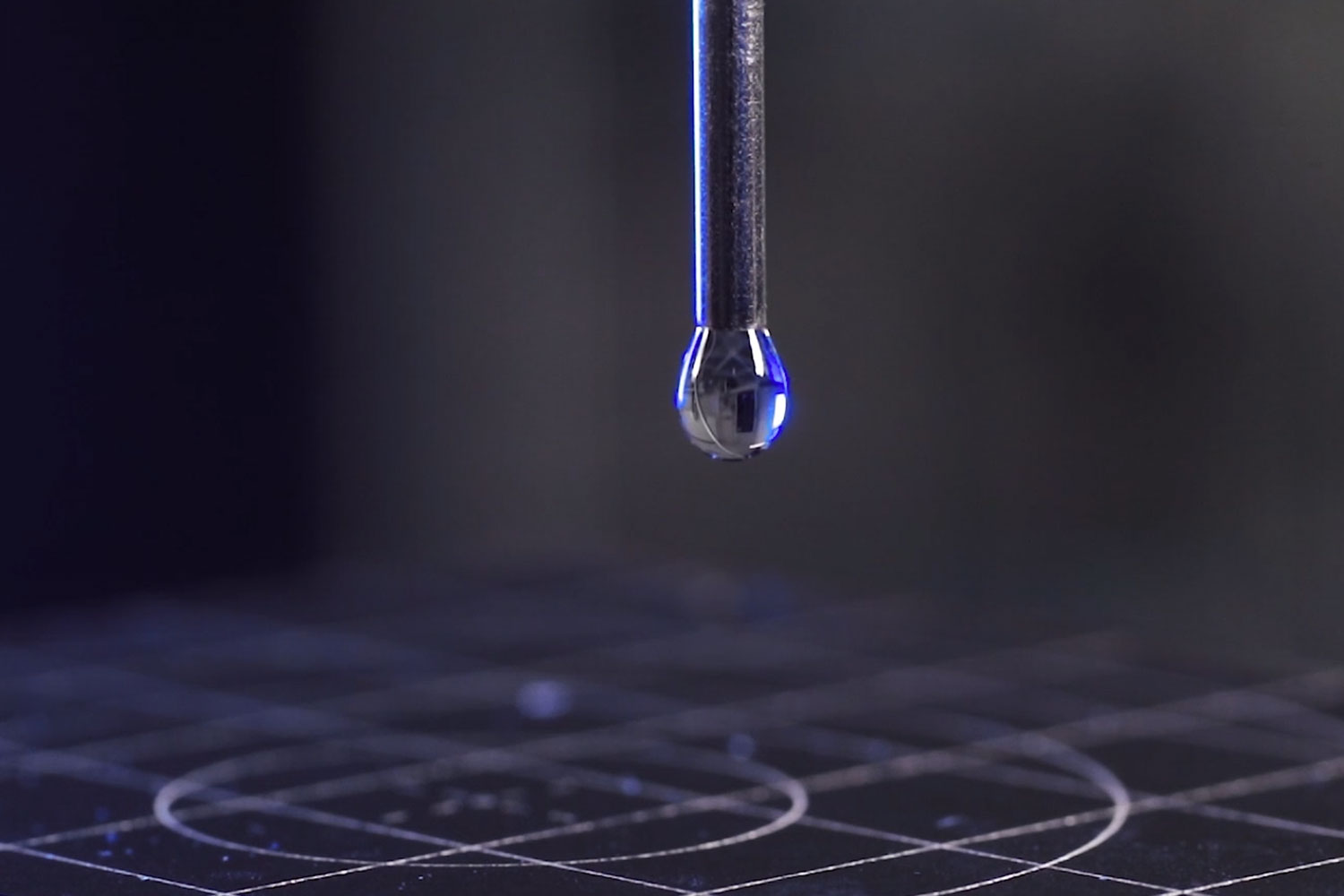
The pendant drop method measures surface tension using an optical tensiometer. A liquid drop is formed at the tip of a needle or pipette, and images of the suspended drop are captured at defined time intervals (Figure 5). Surface tension is calculated from the drop profile and the liquid–ambient density difference using the Young–Laplace equation.
The minimum measurable surface age depends primarily on how quickly the drop can be formed and the imaging system can capture its profile. With modern optical tensiometers, drop formation may take approximately one second, making the pendant drop method suitable for studying many surfactants with relatively fast adsorption kinetics. The technique can also monitor surface tension over extended periods, from minutes to hours, making it useful for investigating slower adsorption processes.
Despite its versatility, the pendant drop method generally cannot resolve adsorption processes occurring within the first few milliseconds after interface formation. For applications involving very rapid surfactant adsorption, such as spraying and inkjet printing, this limitation may prevent accurate characterization of the initial dynamic surface tension.
By controlling the rate at which bubbles are generated, the technique can measure dynamic surface tension at surface ages as short as approximately 5 milliseconds. This capability makes it particularly suitable for characterizing fast adsorption kinetics and evaluating surfactant performance in processes where new interfaces form rapidly.
The main limitation is its measurement range: the maximum bubble pressure method generally covers surface ages from milliseconds to approximately one minute, depending on the instrument and measurement conditions. For slower adsorption processes extending beyond this range, the pendant drop or Wilhelmy plate method is typically more suitable.
Choosing the Right Technique
Ultimately, the measurement technique must capture the relevant surface age range to provide meaningful dynamic surface tension data. Choosing a method with an insufficiently fast initial measurement can cause important adsorption behavior to be overlooked, potentially leading to an inaccurate assessment of surfactant performance.
References
Kim, H. L.; Mcauley, A.; Mcguire, J. Protein effects on surfactant adsorption suggest the dominant mode of Surfactant-Mediated stabilization of protein. Journal of Pharmaceutical Sciences 2014, 103 (5), 1337–1345. https://doi.org/10.1002/jps.23908. ↩︎
Ayati, N. S.; Kanthe, A. D.; Krause, M.; Zheng, S.; Zhang, H.; Macias, L. E. O.; Maldarelli, C.; Tu, R. S. Adsorption of mixed micelles of polysorbate 80 and oleic acid to the Air–Water interface. Langmuir 2026, 42 (2), 2200–2211. https://doi.org/10.1021/acs.langmuir.5c05532. ↩︎
